Best Heat Press Machine: Reviews, Buying Guide, and FAQs 2026
by Mia M.
You've just decided to launch a custom T-shirt side hustle — or maybe you want to press a few personalized gifts — and you open up a browser tab to search for heat press machines. Within seconds you're drowning in options: clamshell, swing-away, auto-open, 12x15, 15x15, 16x20. The price range alone runs from under a hundred dollars to well over a thousand. It's genuinely overwhelming, and picking the wrong machine can cost you weeks of frustration and wasted transfers.
That's exactly why we built this guide. We've reviewed the top heat press machines available in 2026 — from compact beginner presses to professional-grade commercial workhorses — and broken down who each one is actually built for. Whether you're sublimating mugs, pressing heat transfer vinyl onto hoodies, or running a full production line, there's a right machine for your workflow. Browse our full heat press machine reviews to compare every option side by side.
Before you dive into the picks, know this: platen size, pressure consistency, and temperature accuracy matter far more than brand name or price tag. A cheap press with hot spots will ruin transfers. A premium auto-open press will pay for itself inside a year of production volume. Let's get into it.

Contents
- Our Top Picks for 2026
- Our Hands-On Reviews
- Geo Knight DK20A — Best for Professional & Commercial Use
- STAHLS' Hotronix Fusion IQ — Best for High-Volume Production
- PowerPress Industrial-Quality 15x15 — Best Value for Home Studios
- AGH 15x15 Inch — Best Budget Swing-Away
- F2C 5 in 1 Pro — Best Multi-Function Combo Kit
- VEVOR 12x10 — Best Compact Beginner Press
- Slendor 5 in 1 — Best for Tumblers and Multi-Substrate Work
- How to Pick the Best Heat Press Machine
- Frequently Asked Questions
- Next Steps
Our Top Picks for 2026
- #PreviewProductRating
- Bestseller No. 1
 Rating:

- Bestseller No. 2
 Rating:
 - Bestseller No. 3
 Rating:
 - Bestseller No. 4
 Rating:
 - Bestseller No. 5
 Rating:
 - Bestseller No. 6
 Rating:
 - Bestseller No. 7
 Rating:
Our Hands-On Reviews
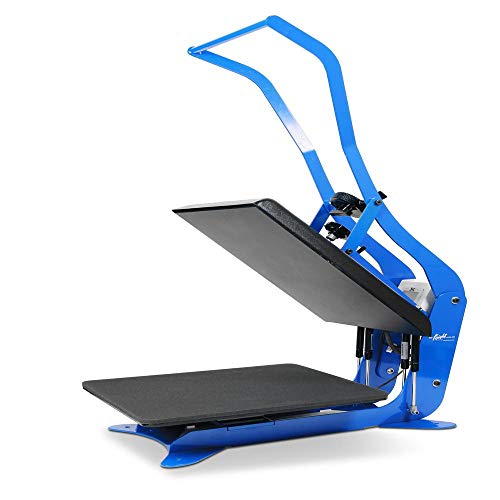
1. Geo Knight DK20A Auto-Open Heat Transfer Press — Best for Professional & Commercial Use
The Geo Knight DK20A is the machine you buy when you're serious. 100% made in the USA, engineered to last decades rather than years, this 16" x 20" auto-open press is in a different class from anything else on this list. The SuperCoil-Microwinding heater technology delivers temperature readout accuracy of ±2°F — that's not a marketing claim, that's a spec that matters when you're pressing hundreds of shirts a day and can't afford wasted runs. At 83 lbs it's surprisingly portable for its size, and the self-lifting gas-spring means your wrist doesn't take the punishment of manual operation.
The auto-release pop-up mechanism opens automatically at the end of every time cycle. That sounds like a small thing until you've been running production for four hours and your reaction time starts to slip. The "Hover" position is genuinely clever — it cures materials without pressing, which is exactly what you need for delicate sublimation work or pre-pressing moisture out of garments. Temperature range runs 32°–600°F, which covers every transfer application you'll encounter, including high-temperature specialty films. The all-thread table loading design and interchangeable tables mean you can adapt this machine as your product line expands.
This is not the machine for someone pressing ten shirts a week. The price reflects its commercial grade. But if you're running a real operation — or planning to — the Geo Knight DK20A is the machine you want under your hands. The solid steel framework, the dual pre-press timer, the digital pressure bar graph — every detail is engineered for production environments where downtime is money lost.
Pros:
- ±2°F temperature accuracy eliminates inconsistent transfers
- Auto-release pop-up protects materials and reduces operator fatigue
- SuperCoil-Microwinding heater for even heat distribution across the full 16" x 20" platen
- Interchangeable tables expand your substrate range
- Built in the USA with a decades-long service expectation
- Wide 32°–600°F range covers every transfer type
Cons:
- Premium price puts it out of reach for hobbyists and beginners
- 83 lbs — still portable, but you'll want a sturdy dedicated table
2. STAHLS' Hotronix Fusion IQ 16"x20" Swing & Draw Heat Press — Best for High-Volume Production
STAHLS' has been a name in professional heat transfer for decades, and the Hotronix Fusion IQ is their flagship answer to the modern production floor. What separates it from every other swing-away press on this list is the patented dual-function Swing & Draw design — you can operate it as a traditional swing-away or pull the platen straight toward you like a drawer. That flexibility matters when your workspace is tight or when you're switching between operators with different preferences. You don't have to redesign your station around the machine.
The smart touchscreen control panel is a genuine step up from the basic LED boards you find on budget machines. Unlimited preset programs mean you can store settings for every substrate you press — HTV on cotton, sublimation on polyester, DTF on fleece — and recall them instantly without re-dialing temperature and time every session. Live readouts of time, temperature (32°–430°F), and pressure keep you in command of every press. The ¾" thick non-stick coated platen is compatible with all STAHLS' Quick Change Platens, which is a significant investment protection point: your accessory platens carry over as your business grows.
If you're producing high volumes of heat transfer vinyl, sublimation, DTF, or DTG work in 2026, the Fusion IQ is built for exactly that pace. It's positioned between the Geo Knight's pure commercial focus and mid-market options — a sweet spot for serious small businesses and growing operations. The swing & draw patent alone is worth examining if workspace ergonomics are a constraint for you.
Pros:
- Patented Swing & Draw mechanism adapts to your workspace
- Smart touchscreen with unlimited preset programs
- Live pressure readout — rare at this price tier
- Compatible with all STAHLS' Quick Change Platens
- Handles HTV, sublimation, DTF, and DTG in one machine
Cons:
- Upper temperature cap of 430°F rules out some specialty high-temp films
- Premium price, though justified for production volume
3. PowerPress Industrial-Quality Digital Sublimation Heat Press 15x15 — Best Value for Home Studios
The PowerPress 15x15 punches well above its price bracket and has been a consistent best-seller for a reason. At 1400W on a standard 110V outlet, it delivers genuine heat and pressure in a package that fits on a home studio workbench. The 15"x15" Teflon-coated platen handles full-chest T-shirt prints, large pillow designs, and tote bags in a single press — no repositioning, no seams from incomplete coverage. Temperature range of 32–455°F and a 0–999 second timer give you enough headroom for the vast majority of sublimation and HTV applications.
Two features stand out at this price point. First, the removable silicone mat on the lower platen isn't glued in — you can lift it off, wash it, and replace it when it wears out. That sounds basic but most entry-level presses skip this entirely, leaving you with a sticky, transfer-contaminated base that ruins your next job. Second, the bottom handle is a real safety feature: when the press has been cycling at high temperature for hours, the clamshell frame can shift slightly under thermal expansion, making the upper platen hard to open. The bottom handle gives you a safe grip point without burning your hand.
If you're pairing this machine with a sublimation workflow, check out our guide to the best sublimation printers for 2026 — the PowerPress works well with most entry to mid-range sublimation setups. It's an honest, capable machine for home studios doing moderate volume. Don't expect it to outlast a Geo Knight, but for the price, reliability has been strong.
Pros:
- 15"x15" platen covers full-size T-shirt prints in one press
- Removable, washable, and replaceable silicone mat
- Bottom handle for safe high-temperature operation
- 1400W delivers fast heat recovery between presses
- Straightforward digital control board
Cons:
- 455°F ceiling means some specialty applications are off the table
- Build quality is noticeably below the commercial-tier options
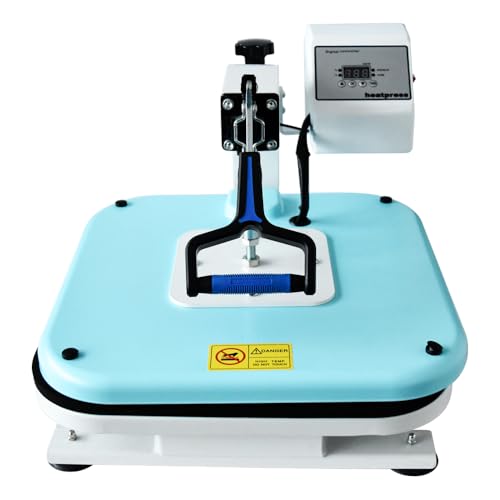
4. AGH 15x15 Inch Heat Press Machine 1200W — Best Budget Swing-Away
The AGH 15x15 is a newer entry in the budget swing-away category, and it addresses two genuine pain points that cheaper clamshell presses create: workspace safety during garment loading and heat coverage on thick substrates. The 360° rotating heating plate swings fully away from your work area when you're positioning garments — no reaching under a hot platen, no rushing to get fabric flat before the machine burns you. For beginners especially, that safety margin matters. The anti-scald surfaces and heat-insulating cotton design add another layer of protection when you're working with bulky items like throw pillows and towels.
Pressure is adjustable to accommodate the full range of substrate thicknesses you'll encounter — from a single cotton T-shirt to a doubled-up pillow panel. The Teflon-coated heating plate resists adhesive buildup and stays flat even after extended use cycles. At 1200W the machine heats up quickly and recovers between presses at a pace that works for moderate production runs. The 15"x15" platen handles brimmed hat prints, full towel patterns, and complete pillow designs without repositioning.
If you're just getting started with custom apparel and want a swing-away machine at a budget price, the AGH delivers the fundamentals. It won't match the longevity of commercial machines and the digital controls are basic, but the 360° rotation safety design and adjustable pressure make it a smarter starting point than a fixed clamshell at the same price. If you're also looking to run a Cricut alongside your press, our Cricut machine review covers the best cutters to pair with your heat press setup.
Pros:
- 360° rotation keeps the hot platen away from your hands during loading
- Anti-scald and heat-insulating cotton design
- Adjustable pressure handles everything from T-shirts to thick pillows
- Teflon coating resists buildup and stays flat long-term
- Budget-friendly entry into swing-away territory
Cons:
- 1200W is adequate but slower to heat compared to 1400W+ machines
- Basic digital controls — no preset programs
5. F2C 5 in 1 Pro Heat Press Machine 12x15 Digital — Best Multi-Function Combo Kit
The F2C 5 in 1 is the right answer when your product line isn't limited to flat garments. You get a 12"x15" flat platen for T-shirts and bags, plus dedicated cradles for mugs, plates, hats, and pads — five substrate types covered in one machine with a full 360-degree swing-away design. The detachable upgraded aluminum alloy cradle system is the key to making this combo format work in practice: each attachment swaps out cleanly without tools, and the non-stick surface means you're not dealing with adhesive contamination between substrate types.
The digital control panel keeps precision on point: temperature and time are fully adjustable, a built-in fuse adds a layer of electrical safety, and the swing-away design keeps your hands clear during loading and unloading. Heat transfers work across cotton, linen, chemical fiber, and nylon — plus sublimation onto hard substrates like mugs and plates. The 12"x15" flat platen is slightly smaller than the 15"x15" machines above, which matters if you're pressing full-chest designs on XL or XXL shirts, but for standard sizing it's sufficient.
The F2C combo is particularly smart if you're building a gifting or personalization business where mugs, hats, and shirts all share the same order queue. One machine covers your full product catalog at a price point that doesn't require a separate investment for each substrate. If you're expanding into custom printing more broadly, our roundup of the best printers for crafting covers the output side of the workflow.
Pros:
- Five substrate types in one machine — flat, mug, plate, hat, pad
- Detachable aluminum alloy cradles swap without tools
- Non-stick flat platen surface — no separate Teflon sheet required
- Full 360° swing-away and digital control
- Built-in fuse for electrical safety
Cons:
- 12"x15" flat platen is smaller than standard 15"x15" machines
- Not optimized for high-volume flat-garment production
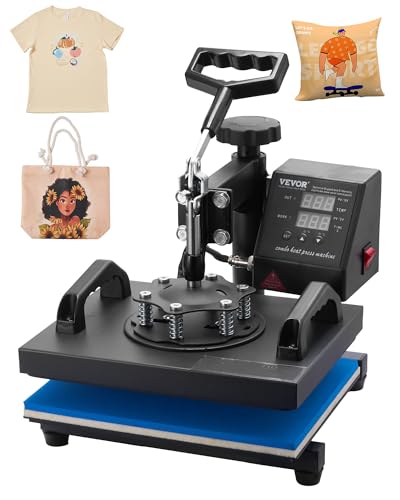
6. VEVOR Heat Press 12x10in Clamshell Sublimation Transfer Printer — Best Compact Beginner Press
The VEVOR 12x10 is the entry point for people who want to test heat pressing before committing to a larger machine. At 650W it draws less power and heats a smaller footprint, making it the most space-efficient option on this list. The newer-generation thicker heating tubes improve heat retention and reduce temperature differential across the platen — a common weakness in cheap compact presses that creates uneven transfers with lighter ink on one side and scorching on the other. The Teflon sheet coating prevents transfers from sticking and protects your designs from direct contact with the plate.
The swing-away aluminum rod is an important ergonomic and safety addition for a clamshell design — it keeps the upper platen from falling onto your hands during loading. The non-slip rubber grip handle and pressure knob are designed for consistent, repeatable presses across different material thicknesses. For flat items — T-shirts, pillowcases, cell phone cases, holiday ornaments, puzzles — the VEVOR covers the basics without complication.
Be realistic about what the 12"x10" platen means: you can't press a full-chest design on a large shirt in one pass. For youth sizes, smaller prints, and accessories this is plenty. For adult standard prints, you'll be repositioning. If you know from the start that full-size adult apparel is your primary use case, step up to a 15"x15" machine. But if you're experimenting with custom gifts and small-run products, the VEVOR gets you started with minimal investment and minimal table space.
Pros:
- Compact 12"x10" footprint — fits on tight workspaces
- Improved heating tubes reduce hot spots
- Teflon sheet prevents sticking and protects transfers
- Swing-away rod improves safety over standard clamshell designs
- Low barrier to entry for beginners
Cons:
- 12"x10" platen requires repositioning for full-size adult shirt designs
- 650W means slower heat-up and recovery time
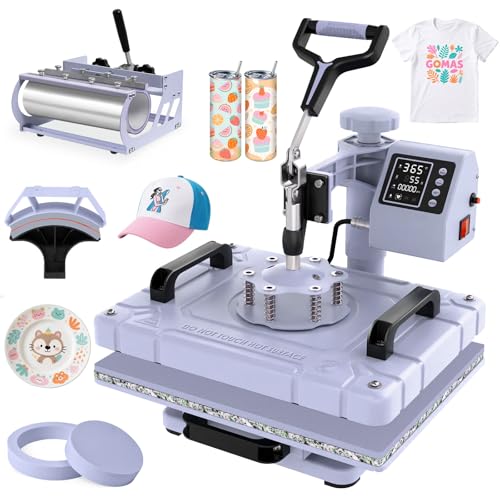
7. Slendor Heat Press Machine 5 in 1 Sublimation 12"x15" — Best for Tumblers and Multi-Substrate Work
The Slendor 5 in 1 stands out from other combo machines in this price range because of its dedicated tumbler press attachments for both 20oz and 30oz sizes — the two most popular tumbler sizes in the custom drinkware market. Most combo presses stop at mugs and plates; the Slendor includes the skinny tumbler attachment that's become essential for anyone selling on Etsy or at craft fairs in 2026. The upgraded press-casting aluminum heating plate with Teflon coating is paired with two bonus Teflon sheets, giving you double protection for your vinyl and garments.
The bottom platform uses two layers of thickened heat-resistant sponge padding, which does two things: it flattens the fabric more evenly under pressure, and it improves transfer adhesion on uneven or thick substrates like towels and padded hats. The innovative alloy guide rail makes converting between attachment types noticeably faster than the standard cradle swap on comparable machines. The LCD digital control box covers 0–482°F with Fahrenheit/Celsius switching, a 0–999 second timer, and a counting function that tracks how many presses you've completed — useful for batch production and quality tracking.
The lavender colorway is a cosmetic differentiator that won't matter to most buyers, but the sublimation heat transfer process this machine is built for is serious — and the Slendor handles it competently across flat garments, hats, mugs, plates, and tumblers. If your product line leans heavily toward drinkware, this is the combo machine to buy. The alarm at press completion and automatic heating cutoff at preset temperature add operational reliability that matters in a production context.
Pros:
- Includes attachments for 20oz and 30oz tumblers — rare at this price
- Dual Teflon sheets included for extra transfer protection
- Two-layer thickened sponge pad for even fabric contact
- Fast alloy guide rail conversion between attachments
- Press counter function for batch production tracking
- Temperature alarm and auto-stop at preset
Cons:
- 12"x15" flat platen is smaller than standard 15"x15"
- Primarily suited for sublimation — not the top pick for heavy HTV work
How to Pick the Best Heat Press Machine
Platen Size: Match It to Your Primary Substrate
Platen size is the single most important spec to get right before you buy anything else. Here's how to think about it:
- 12"x10" — Suitable for small prints, accessories, and beginner experimentation. Requires repositioning for full adult-size shirt designs.
- 12"x15" — The minimum workable size for standard adult T-shirts. Good for multi-function combo machines where you're also pressing hats, mugs, and tumblers.
- 15"x15" — The sweet spot for home studios doing consistent T-shirt production. Covers full-chest prints on adult sizes without repositioning.
- 16"x20" — Commercial standard. Covers oversized designs, large-format transfers, and production volume without limitations.
Don't buy a 12"x10" machine thinking you'll upgrade later. The upgrade cost is just the price of the right machine now, paid in two installments.
Press Type: Clamshell vs Swing-Away vs Auto-Open
The mechanism affects both safety and workspace requirements:
- Clamshell — Opens like a lid directly above the platen. Compact footprint, but your hands are working under a hot surface. Faster to operate in tight spaces.
- Swing-Away — Upper platen rotates away from the lower board. Safer hand placement, better visibility when positioning garments. Takes more horizontal space.
- Auto-Open — Machine opens automatically at cycle end. Removes the reaction-time variable entirely. Standard on commercial machines like the Geo Knight DK20A.
- Swing & Draw — Patented hybrid on the STAHLS' Fusion IQ. Combines swing-away motion with a pull-toward-you drawer option for workspace flexibility.
Temperature Accuracy and Heat Distribution
This is where cheap machines fail. A press that shows 375°F on the display but has a 30°F temperature differential across the platen will give you washed-out transfers on one side and scorched fabric on the other. When evaluating temperature specs, look for:
- Stated temperature accuracy — ±2°F (Geo Knight) is exceptional; ±5°F is acceptable; anything vaguer is a red flag
- Heating technology — SuperCoil-Microwinding (Geo Knight), thick heating tubes (VEVOR), and cast aluminum plates (Slendor) all distribute heat more evenly than basic coil elements
- Temperature range — 32°–455°F covers most sublimation and HTV; 600°F is needed for some industrial specialty applications
Even heat distribution matters more than maximum temperature for the vast majority of applications. A press that hits 600°F unevenly is less useful than one that holds 375°F perfectly flat across the entire platen.
Digital Controls and Preset Programs
For consistent results, especially across different materials, you want precise digital control — not analog dials. Key features to look for:
- Digital temperature readout with clear display
- Adjustable timer in seconds (0–999s covers everything)
- Preset program storage (essential for multi-substrate production — the STAHLS' Fusion IQ offers unlimited presets)
- Fahrenheit/Celsius toggle (useful if you work with international transfer suppliers)
- Audible alarm at cycle completion (prevents over-pressing when you're multitasking)
Basic LCD boards on budget machines are functional but tedious when you're switching between HTV on cotton at 320°F for 15 seconds and sublimation on polyester at 380°F for 60 seconds. Preset programs cut that friction entirely.
Frequently Asked Questions
What's the difference between a heat press machine and an iron for heat transfers?
A household iron can't maintain consistent temperature and pressure across a surface, which leads to patchy adhesion and premature peeling. A heat press applies uniform temperature and calibrated pressure across the entire platen simultaneously. The result is transfers that last through hundreds of wash cycles rather than washing out after a few. For anything beyond single casual use, a dedicated heat press is necessary — not optional.
What temperature and time settings should I use for HTV (heat transfer vinyl)?
Most HTV presses at 305°F–320°F for 10–15 seconds with medium-firm pressure, but always follow the specific instructions from your vinyl manufacturer. Different vinyl formulations — regular, glitter, foil, stretch — have different requirements. Use a Teflon sheet over the design to protect the vinyl surface, and do a test press on scrap fabric before committing to finished garments.
Can I use a heat press for sublimation printing?
Yes — sublimation is one of the most common heat press applications. You need polyester fabric or polyester-coated hard substrates (mugs, plates, tumblers), sublimation ink printed onto sublimation paper, and a press that reaches 380°–400°F. The heat and pressure convert the sublimation ink from solid to gas, which permanently bonds with the polyester fibers. Cotton and natural fibers don't accept sublimation dye. For the printing side of the workflow, check out the best sublimation printers of 2026 to pair with your press.
How much pressure should a heat press apply?
Pressure requirements vary by substrate and transfer type. Light pressure works for delicate fabrics and thin transfers. Medium pressure is the standard for most HTV and sublimation applications. Firm pressure is required for thick substrates like towels, heavy hoodies, and padded hats. Your machine's pressure knob or bar graph (on commercial machines like the Geo Knight) lets you adjust this. If you're seeing transfer lifting at the edges, increase pressure. If you're getting visible platen marks on the fabric, reduce it.
Is a 15"x15" or 16"x20" heat press better for a small business?
A 15"x15" press handles the majority of small business garment work — adult T-shirts, tote bags, pillowcases, and most apparel. A 16"x20" press is worth the investment when you're pressing oversized designs, large-format transfers, or running production volume where the extra coverage reduces repositioning time. If you're averaging more than 30–50 shirts per day, step up to 16"x20". Below that, a quality 15"x15" machine is the smarter economic choice.
What's the best heat press machine for beginners in 2026?
The VEVOR 12"x10" is the most accessible starting point for pure beginners with limited space and budget. If you can step up to a 15"x15" machine, the PowerPress Industrial-Quality or the AGH 15"x15" swing-away both provide better long-term capability for a modest additional investment. Beginners who want to press multiple substrate types from day one — shirts, mugs, hats — should look at the F2C 5 in 1 or the Slendor 5 in 1 combo kits instead of buying a flat press and attachment set separately.
Buy on Walmart
- Geo Knight DK20A Auto-Open Heat Transfer Press - 16" x 20" — Walmart Link
- STAHLS' Hotronix Fusion IQ 16"x20" Swing & Draw Heat Press: — Walmart Link
- PowerPress Industrial-Quality Digital Sublimation Heat Press — Walmart Link
- AGH 15x15 Inch Heat Press Machine, 1200W Heat Transfer Machi — Walmart Link
- F2C 5 in 1 Pro Heat Press Machine 12x15 Digital Heat Transfe — Walmart Link
- VEVOR Heat Press, 12x10in Heat Press Machine, Clamshell Subl — Walmart Link
- Slendor Heat Press Machine Sublimation Heat Press 360° Swing — Walmart Link
Buy on eBay
- Geo Knight DK20A Auto-Open Heat Transfer Press - 16" x 20" — eBay Link
- STAHLS' Hotronix Fusion IQ 16"x20" Swing & Draw Heat Press: — eBay Link
- PowerPress Industrial-Quality Digital Sublimation Heat Press — eBay Link
- AGH 15x15 Inch Heat Press Machine, 1200W Heat Transfer Machi — eBay Link
- F2C 5 in 1 Pro Heat Press Machine 12x15 Digital Heat Transfe — eBay Link
- VEVOR Heat Press, 12x10in Heat Press Machine, Clamshell Subl — eBay Link
- Slendor Heat Press Machine Sublimation Heat Press 360° Swing — eBay Link
Next Steps
- Match your platen size to your primary product — decide whether 12"x15", 15"x15", or 16"x20" fits your substrate before comparing prices or brands.
- Check current prices on Amazon for your top two or three picks — heat press pricing shifts regularly, and deals appear on specific models seasonally.
- Order a test substrate and transfer sheet before your first production run — press scrap fabric at your target temperature and time settings to confirm calibration before touching a finished garment.
- Set up your sublimation printing workflow — if sublimation is your primary use case, read our best sublimation printer guide for 2026 to match your press with the right printer and ink system.
- Bookmark your category page at heat press machine reviews to track new models and updated recommendations as the 2026 lineup continues to expand.
 |
 |
 |
 |

About Mia M.
Mia M. runs Beautiful Inspiring Creative Life, a personal blog covering DIY projects, bullet journaling, stationery, fashion finds, and interior inspiration. Her writing takes a creative-life-documentation approach — sharing the small aesthetic pleasures and practical projects that make daily life feel more intentional. Topics span hand-lettering and planner spreads, DIY room makeovers, thrift flips, affordable fashion, and honest reviews of the notebooks, pens, and craft supplies she actually uses. The blog began as a personal journaling project and grew into a creative-lifestyle space for readers building their own aesthetic routines, with posts that balance inspiration with the real-world budgets and time constraints of everyday hobbyists.
hey, i'm mia

tattoo lover, plant hoarder, DIY addict and overall stoner grandma
Check out the FREE Gifts. Or latest free DIY eBooks from our best compilation.
Turn off Ad Block to reveal all the secrets. Once done, hit any button:
|
|
|
|