10 Tips for Cultivating Creativity in Your Daily Life
by Mia M.
Which of these seven creativity tools is actually worth your money in 2026 — and which one belongs at the top of your cart right now? After reviewing all of them, the Faber-Castell Polychromos 120-Color Pencil Set earns our top pick. Its professional-grade pigments and buttery smooth laydown make it the gold standard for artists of every level.
Creativity is a skill, not just a trait — and the right tools accelerate everything. According to Wikipedia's overview of creativity, it spans artistic expression, scientific thinking, and everyday problem-solving. That means the tools you choose should be flexible enough to support all of it. This guide covers seven of the best creativity-boosting products available right now, from analog notebooks and color systems to digital drawing tablets and smart note-taking guides. Whether you explore creativity through drawing, journaling, brainstorming, or digital design, there's something here for you. Explore more ideas in our creative lifestyle guides for even more inspiration.
If you've been feeling uninspired or stuck in a creative rut, the right tool can genuinely shift things. We've seen it happen — and if you need extra motivation alongside the gear, our post on how to get out of a burnout or slump and be productive is a great companion read to this guide. Now let's break down exactly what each of these products offers, what falls short, and who each one is really for.

Contents
Our Top Picks for 2026
- #PreviewProductRating
- Bestseller No. 1
 Rating:

- Bestseller No. 2
 Rating:
 - Bestseller No. 3
 Rating:
 - Bestseller No. 4
 Rating:
 - Bestseller No. 5
 Rating:
 - Bestseller No. 6
 Rating:
 - Bestseller No. 7
 Rating:
In-Depth Reviews
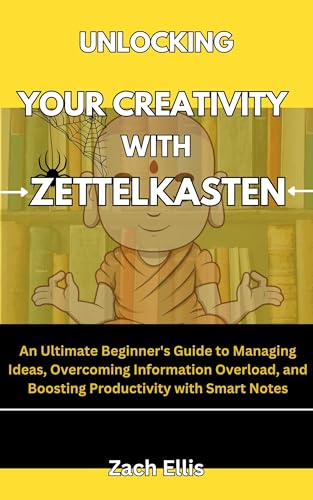
1. Unlocking Your Creativity with Zettelkasten — Best for Writers & Knowledge Workers
If your creativity is buried under information overload, this book is your shovel. The Zettelkasten method turns your note-taking habit into a living idea engine — a networked system where thoughts connect and compound over time. This beginner's guide walks you through the entire concept from scratch, explaining how to capture, link, and retrieve ideas in a way that actually fuels creative output rather than just archiving information you'll never revisit. It's aimed squarely at writers, researchers, bloggers, and anyone who feels like they have plenty of ideas but can never find them when it counts.
The book excels at making a dense productivity concept accessible without dumbing it down. You'll learn how to set up your first slip-box, how to write atomic notes, and how to draw meaningful connections between ideas across weeks and months of work. For bloggers especially — whether you're learning how to plan and set up a blog or scaling an existing site — the Zettelkasten system can dramatically speed up the ideation and drafting process. The concepts apply to any creative discipline, not just writing.
It's a digital book, so there's no physical product to wear down or misplace. The concepts are evergreen, and the writing is clear and action-oriented. If you've struggled with traditional linear note-taking, this is the paradigm shift you need in 2026.
Pros:
- Beginner-friendly explanation of a powerful note-taking framework
- Immediately applicable to writing, blogging, research, and creative projects
- Addresses information overload with a systematic, sustainable approach
- Boosts long-term creative productivity, not just short-term organization
Cons:
- Digital format only — no physical book to annotate or display
- Requires commitment and habit-building to see real results
2. LEUCHTTURM1917 120G Special Edition A5 Notebook — Best for Fountain Pen & Brush Pen Users
Not all notebooks are created equal, and the LEUCHTTURM1917 120G Special Edition makes that obvious within the first page. The 120 g/m² paper is the defining feature here — it's thick enough to handle fountain pens, brush pens, and markers without bleed-through or feathering, which is a genuine problem with standard 80–90 gsm notebooks. The paper was developed and manufactured in Germany specifically for a flowing, pleasant writing experience, and you feel that the moment your pen hits the surface. It's smooth, slightly off-white, and beautifully responsive.
Beyond the paper, you get all the hallmark LEUCHTTURM1917 details: a numbered table of contents, 203 individually numbered pages, two ribbon page markers, an elastic closure band, a rear pocket, and labeling stickers. The dotted grid layout is ideal for bullet journaling, sketching, and structured brainstorming. The Navy hardcover is sleek without being flashy. This is a notebook built for daily use over months — the kind that becomes a creative artifact in itself over time.
It's priced at a premium compared to basic notebooks, but if you're investing in a serious journaling or creative practice, the paper quality alone justifies the cost. If you love journaling for intentional living, this pairs perfectly with our picks for the best manifestation journals.
Pros:
- 120 gsm paper handles fountain pens, brush pens, and markers without bleed
- 203 individually numbered pages with a table of contents
- Two ribbon markers, elastic closure, rear pocket, and labeling stickers included
- Robust hardcover holds up to daily carry and heavy use
- Dotted layout is ideal for creative layouts and bullet journaling
Cons:
- Premium price point compared to standard notebooks
- Heavier than lightweight alternatives — not the most minimal carry option
3. Faber-Castell Polychromos Artists' Color Pencils 120-Tin — Best Overall for Artists
This is our top pick, and it earns that title across every metric that matters. The Polychromos lineup from Faber-Castell has been the benchmark for professional artist-grade color pencils for decades, and the 120-color tin brings that legacy to its fullest expression. Each pencil features oil-based leads with an exceptionally smooth, buttery laydown that makes blending feel effortless. You can build up layers gradually for rich depth, or apply a single pass for clean, vibrant coverage — both approaches work beautifully.
The pigment quality is outstanding. Faber-Castell has engineered these pencils for unsurpassed lightfastness, meaning your finished artwork won't fade or shift in color even with long-term light exposure. That's a critical factor if you're creating work you actually want to keep or sell. The 120-color range is comprehensive — you'll find a full spectrum of hues with enough variation in value and temperature within each color family to work with true color theory without mixing.
The metal tin is a premium touch that keeps all 120 pencils organized, protected, and easy to access. These aren't beginner pencils, but they're genuinely accessible to intermediate artists ready to invest in quality. If you're building out a creative toolkit in 2026, this is the anchor piece everything else gets built around.
Pros:
- Oil-based leads deliver smooth, effortless blending and layering
- Unsurpassed lightfastness — colors stay vibrant over time
- 120 professional-grade colors cover the full spectrum for serious work
- Durable metal tin keeps all pencils organized and protected
- Works on a wide variety of paper types and textures
Cons:
- Significant upfront investment compared to entry-level sets
- Oil-based leads require more pressure for deep saturation compared to wax-based alternatives
4. Moleskine Art Plus Watercolor Album, Large — Best for Watercolor Artists on the Go
If watercolor is your medium, you need paper that can handle wet media without warping, buckling, or destroying your work. The Moleskine Art Plus Watercolor Album is engineered specifically for wet-on-wet and wet-on-dry watercolor techniques, with a heavy paper stock that absorbs water without distorting. The large 5 x 8.25-inch format gives you enough real estate for meaningful compositions while remaining compact enough to toss in a bag for plein air sessions or travel sketching.
The hardcover construction keeps the album sturdy and flat during use, which matters more than most people realize until they've tried painting on a floppy surface. The black cover is minimalist and elegant without looking precious. Moleskine's signature elastic closure keeps everything secure between sessions, and the album lays flat when open — an underrated feature that makes painting in it genuinely comfortable.
This is a purpose-built product for a specific use case, and it delivers on that purpose. It's not a general-purpose sketchbook — if you're working in graphite or color pencil, you'd be better served by one of the other picks here. But for watercolor, gouache, and light ink wash work, it's a reliable and portable choice that won't let your artwork down.
Pros:
- Paper designed specifically for watercolor — handles wet media without buckling
- Hardcover keeps the album flat and sturdy during use
- Compact large format (5 x 8.25 in.) is ideal for travel and field work
- Flat-opening design makes painting comfortable
- Elastic closure protects work between sessions
Cons:
- Not suitable for dry media — too specialized for a general sketchbook role
- Paper weight may not satisfy users accustomed to heavyweight cold-press watercolor paper
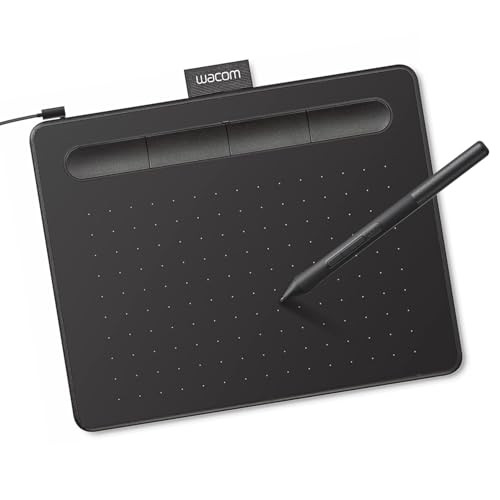
5. Wacom Intuos Small Graphics Drawing Tablet — Best for Digital Artists & Designers
Wacom's Intuos Small is the gateway into professional digital art, and in 2026 it remains the drawing tablet that most creative professionals recommend to beginners and intermediates alike. The EMR (electromagnetic resonance) battery-free pen technology is the standout feature — it gives you a pen-on-paper feeling that other budget tablets fail to replicate, with no lag, no charging, and no interruptions. The pressure sensitivity is precise enough for detailed illustration work, and the four customizable ExpressKeys let you map your most-used shortcuts for a faster workflow.
Compatibility is broad and hassle-free. The Intuos Small works with Chromebooks, Mac, Android, and Windows, and it integrates with virtually every software program you'd use for creative work — from Photoshop and Illustrator to Procreate, Clip Studio, and even video editing tools. Wacom includes training resources and bundled software to help you get started, which is genuinely useful if you're transitioning from analog to digital for the first time.
The compact size is the main trade-off. If you work on large dual-monitor setups, the active area can feel cramped, and you may need to adjust the mapping. For laptop-based creatives and those with standard single-monitor setups, the size is perfectly adequate. This is the tool that professional graphic designers actually use — and that's not marketing, it's just a well-earned reputation built over years.
Pros:
- EMR battery-free pen technology delivers a natural pen-on-paper feeling
- Works with all major software and platforms including Chromebook, Mac, Android, and Windows
- 4 customizable ExpressKeys for faster workflow
- Includes training resources and bundled creative software
- Preferred by professional graphic designers worldwide
Cons:
- Small active area can feel limiting on large or multi-monitor setups
- Requires a learning curve if you're transitioning from traditional media
6. Post-it Super Sticky Notes, 24-Pad Pack — Best for Visual Thinkers & Brainstormers
There's a reason sticky notes have been a staple of creative workspaces for decades — and the Post-it Super Sticky upgrade makes the case for never going back to standard adhesive notes again. The Super Sticky formula delivers twice the holding power of regular sticky notes, which means your ideas actually stay where you put them — on walls, whiteboards, windows, monitors, and any other vertical surface you're using as a brainstorm canvas. With 24 pads of 90 sheets each, you're looking at 2,160 individual notes in the Energy Boost Collection's vibrant color palette.
For visual thinkers who use mind-mapping, kanban boards, or physical idea clustering as part of their creative process, this pack is a genuine asset. The bold colors help you categorize ideas at a glance — group by theme, priority, project, or creative phase. They peel cleanly, leave no residue, and the Super Sticky formula holds reliably even on slightly textured surfaces that standard notes can't handle.
This is a simple product that does exactly what it claims to do, at a price that makes the 24-pad volume feel like a smart buy rather than an indulgent stockpile. If your creative process lives on physical surfaces — walls, glass, whiteboards — this is a no-brainer addition to your toolkit.
Pros:
- Twice the sticking power of standard sticky notes — holds on vertical surfaces reliably
- 24 pads with 90 sheets each — enough to last months of heavy creative use
- Vibrant Energy Boost colors make visual organization intuitive at a glance
- Peels cleanly without leaving residue on walls or windows
- Ideal for mind-mapping, kanban boards, and brainstorm walls
Cons:
- Bulky purchase — takes up meaningful storage space
- Not suitable for premium or textured paper surfaces where repositioning may cause tearing
7. Ultimate 3-in-1 Color Tool, 3rd Edition — Best for Designers & Color Theory Students
Color theory is one of those creative fundamentals that most people know they should understand better — and the Ultimate 3-in-1 Color Tool is the most practical physical reference for bridging that knowledge gap. This updated third edition gives you 24 color cards with numbered swatches, five color plans per color, and both red and green value finders — everything you need to build harmonious palettes, match fabric to paint, or translate between print and digital color models without guesswork.
What separates this tool from a simple color wheel is the level of specificity. Each color card includes CMYK, RGB, and HEX formulas alongside the numbered swatches, which makes this equally useful for print designers, digital artists, fiber artists, and decorators. The fabric preview window is a standout feature for anyone working across physical and digital media. You're not guessing how a digital color translates to real-world materials — you're seeing it directly.
This is an analog reference guide in a world that's increasingly digital, and that's exactly what makes it valuable. Screens vary. Print conditions vary. Having a physical, standardized color reference that you can hold up to a surface, a fabric, or a paint chip is a genuinely useful tool that digital color pickers can't fully replicate. It's compact, durable, and practical — a professional reference that earns its place on any creative's desk in 2026.
Pros:
- 24 color cards with numbered swatches for consistent, repeatable color reference
- Includes CMYK, RGB, and HEX formulas — bridges print and digital color workflows
- Five color plans per color make palette building fast and confident
- Red and green value finders help assess tonal relationships accurately
- Fabric preview window is uniquely useful for textile and mixed-media creators
Cons:
- Primarily a reference tool — most useful alongside other creative materials
- Some digital-first designers may prefer software-based color libraries
Choosing the Right Creativity Tool: A Buying Guide
Analog vs. Digital: Know Your Workflow
The first question to answer before buying is simple: where does your creative process actually live? Analog tools — notebooks, pencils, sticky notes, and color references — offer tactile feedback and zero screen fatigue. They're ideal if you think best on paper, work in physical media, or want to disconnect from devices during creative sessions. Digital tools like the Wacom Intuos give you undo, layers, and software integration that physical media can't match. Most serious creatives use both, but knowing which environment produces your best work tells you where to invest first.
- Choose analog if you journal, sketch, paint, or brainstorm on paper
- Choose digital if you design, edit photos, or work in illustration software
- Consider both if your creative practice crosses multiple disciplines
Match the Tool to Your Medium
Every tool on this list is purpose-built for something specific. Using the wrong product for your medium creates friction that slows your creative output — which defeats the whole point. Here's a quick framework:
- Watercolor and wet media: Moleskine Art Plus Watercolor Album handles wet techniques; standard notebooks do not
- Fountain pens, brush pens, markers: LEUCHTTURM1917 120G is purpose-built for this — standard 80 gsm notebooks will bleed
- Color pencil and mixed media drawing: Faber-Castell Polychromos delivers professional blending and lightfastness that student-grade pencils can't match
- Digital illustration and photo editing: Wacom Intuos integrates with all major software and has professional-grade pen precision
- Brainstorming and visual thinking: Post-it Super Sticky Notes keep your ideas organized on any surface
- Color work across print and digital: The 3-in-1 Color Tool bridges the gap between CMYK, RGB, and real-world materials
Budget: Where to Invest and Where to Save
Not every pick on this list requires a significant financial commitment. The Post-it Super Sticky Notes and the Zettelkasten guide sit at accessible price points — both are high-value buys that punch well above their cost. The Faber-Castell Polychromos and Wacom Intuos are the bigger investments, but they're also the tools most likely to last years and improve your output in measurable ways. Think of those two as infrastructure purchases, not impulse buys. The LEUCHTTURM1917 falls in the middle — it's a premium notebook but not an unreasonable one for what it delivers.
- Start with the Zettelkasten guide and sticky notes if you're on a tight budget
- Invest in the Polychromos pencils and Wacom tablet if quality and longevity are priorities
- The LEUCHTTURM1917 and Moleskine albums are solid mid-range investments for dedicated practitioners
Portability and Workspace Considerations
Where you work matters. If you create at a fixed desk or studio, the 120-pencil tin and drawing tablet work beautifully without portability constraints. But if your creative sessions happen in cafés, on commutes, or outdoors, the Moleskine Watercolor Album and LEUCHTTURM1917 are designed for exactly that. The 3-in-1 Color Tool is slim and lightweight — it travels easily. The Wacom Intuos is compact enough for laptop bags, but it does need a USB connection. Think about where your best ideas happen, and choose tools that go there with you.
FAQs
What's the best creativity tool for beginners in 2026?
For most beginners, the best starting point is the LEUCHTTURM1917 120G Notebook paired with the Zettelkasten guide. The notebook gives you high-quality paper for any medium, and the Zettelkasten system gives you a framework for capturing and developing ideas systematically. Together, they build a creative habit that scales as your practice grows. If you already journal and want to add a visual dimension, start with the Faber-Castell Polychromos 36-color tin (a smaller set in the same line) before committing to the full 120.
Are expensive artist pencils worth it compared to budget sets?
Yes — specifically when it comes to lightfastness and blending performance. Budget pencils use lower-quality pigments that fade faster and layer unevenly. The Faber-Castell Polychromos oil-based leads blend more smoothly and hold their vibrancy over time, which matters if you're creating artwork you want to keep, display, or sell. For casual doodling and journaling, a student-grade set is fine. But for serious illustration or portfolio work, the investment in professional pencils pays off in the quality of your finished pieces.
Can a drawing tablet replace traditional sketching?
It replaces some aspects but not all. A Wacom Intuos gives you the ability to work digitally with professional pen precision, unlimited undo, layer-based composition, and seamless software integration. What it doesn't replicate is the texture and resistance of physical paper, the smell of pencil on sketchbook, or the tactile satisfaction of traditional mark-making. Most working artists use both — digital for speed, editing flexibility, and client deliverables; traditional for exploration, ideation, and personal work. The Wacom Intuos is the right digital bridge if you're ready to add that layer to your practice.
What notebook paper weight is best for mixed media?
For true mixed media work — combining pencil, pen, watercolor, and marker — you want a minimum of 140 g/m² cold-press watercolor paper. The LEUCHTTURM1917 120G is excellent for pens and markers but isn't engineered for heavy wet media. For watercolor and gouache, the Moleskine Art Plus Watercolor Album is the right choice in this roundup. If you need a single notebook that handles everything from fountain pen to light watercolor washes, look for a mixed-media pad rated at 130–160 gsm from a dedicated art paper manufacturer.
How do I build a consistent creative habit using these tools?
Consistency comes from reducing friction, not from motivation. Set up a dedicated creative space with your most-used tools already out and accessible — notebook open, pencils in reach, sticky notes on the wall. The Zettelkasten method reinforces habit by giving every creative session a clear output: a note, a connection, an idea captured. Start with 15 minutes daily and attach your creative session to an existing habit, like morning coffee or an evening wind-down. The tools work best when they're part of a system, not a random collection of supplies you use when inspiration strikes.
Is the Zettelkasten method effective for non-writers?
Yes, and more broadly than most people expect. The Zettelkasten system works for anyone who processes information and generates ideas — researchers, designers, educators, entrepreneurs, and artists all use it effectively. The core principle is simply capturing thoughts as discrete, linked notes rather than in linear lists or buried folders. For visual creatives, the system often works alongside physical sketchbooks: written notes in the Zettelkasten, visual explorations in the notebook. The book in this roundup is specifically written for beginners and explains how to adapt the method across disciplines, not just writing.
Buy on Walmart
- Unlocking Your Creativity with Zettelkasten: An Ultimate Beg — Walmart Link
- LEUCHTTURM1917 - 120G Special Edition - Medium A5 Hardcover — Walmart Link
- Faber-Castell Polychromos Artists' Color Pencils - Tin of 12 — Walmart Link
- Moleskine Art Plus Watercolor Album, Large, Black, Hard Cove — Walmart Link
- Wacom Intuos Small Graphics Drawing Tablet, Includes Trainin — Walmart Link
- Post-it Super Sticky Notes, 24 Sticky Note Pads, 3 x 3 in., — Walmart Link
- Ultimate 3-in-1 Color Tool, Updated 3rd Edition: - 24 Color — Walmart Link
Buy on eBay
- Unlocking Your Creativity with Zettelkasten: An Ultimate Beg — eBay Link
- LEUCHTTURM1917 - 120G Special Edition - Medium A5 Hardcover — eBay Link
- Faber-Castell Polychromos Artists' Color Pencils - Tin of 12 — eBay Link
- Moleskine Art Plus Watercolor Album, Large, Black, Hard Cove — eBay Link
- Wacom Intuos Small Graphics Drawing Tablet, Includes Trainin — eBay Link
- Post-it Super Sticky Notes, 24 Sticky Note Pads, 3 x 3 in., — eBay Link
- Ultimate 3-in-1 Color Tool, Updated 3rd Edition: - 24 Color — eBay Link
Final Thoughts
Every product in this guide earns its place, but the right choice depends entirely on how and where you create. Start with the tool that closes the biggest gap in your current practice — whether that's the Faber-Castell Polychromos for professional color work, the Wacom Intuos for digital illustration, or the LEUCHTTURM1917 for a journaling upgrade you'll actually stick with. Pick the one that fits your workflow, invest in it seriously, and let your creativity do the rest.
 |
 |
 |
 |

About Mia M.
Mia M. runs Beautiful Inspiring Creative Life, a personal blog covering DIY projects, bullet journaling, stationery, fashion finds, and interior inspiration. Her writing takes a creative-life-documentation approach — sharing the small aesthetic pleasures and practical projects that make daily life feel more intentional. Topics span hand-lettering and planner spreads, DIY room makeovers, thrift flips, affordable fashion, and honest reviews of the notebooks, pens, and craft supplies she actually uses. The blog began as a personal journaling project and grew into a creative-lifestyle space for readers building their own aesthetic routines, with posts that balance inspiration with the real-world budgets and time constraints of everyday hobbyists.
hey, i'm mia

tattoo lover, plant hoarder, DIY addict and overall stoner grandma
Check out the FREE Gifts. Or latest free DIY eBooks from our best compilation.
Turn off Ad Block to reveal all the secrets. Once done, hit any button:
|
|
|
|