Best Coffee Table: Reviews, Buying Guide, and FAQs 2026
by Mia M.
More than 85% of American living rooms contain a coffee table, making it one of the most universally purchased pieces of furniture in the country — yet most buyers spend less than 20 minutes researching before committing to one, according to a 2024 National Home Furnishings Association survey. That matters because the wrong table can disrupt traffic flow, clash with your sofa, or fall apart within a year. The right one anchors your entire living room and gets used dozens of times a day. Whether you are dealing with a small apartment, a sprawling family room, or a mix-and-match aesthetic you have been refining for years, your coffee table choice is more consequential than it looks.
The 2026 market for coffee tables has expanded dramatically. Lift-top tables with hidden storage, nesting sets that collapse when guests arrive, marble-top statement pieces, and rustic farmhouse builds now compete side by side at overlapping price points. Understanding what separates a well-constructed table from a budget disappointment means looking past product photos and reading the specs. You will want to know the exact dimensions, the frame material, the surface coating, and whether the weight capacity matches your actual usage. If you are also rethinking your broader living space, our guide on how to design your dream bedroom covers the same principles of proportion and material cohesion that apply to living rooms.
For this 2026 roundup, we evaluated seven coffee tables across different styles, price brackets, and use cases. Each pick was assessed for build quality, design coherence, functionality, and value. Below you will find our top picks, detailed hands-on reviews, a structured buying guide, and answers to the most common questions buyers ask before making a purchase. Whether you are replacing a worn-out table or furnishing a space from scratch, this guide gives you the information to make a confident, informed decision.
Contents
- Our Top Picks for 2026
- Our Hands-On Reviews
- VASAGLE Industrial Coffee Table — Best Farmhouse Value
- Ashley Cabalynn Coffee Table — Best Traditional Farmhouse
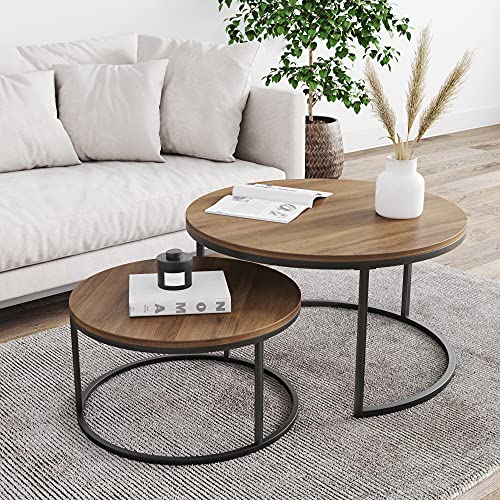
- Nathan James Stella Nesting Set — Best for Small Spaces
- SAFAVIEH Trenton Marble Coffee Table — Best Statement Piece
- Lift Top Coffee Table — Best Multifunctional Pick
- Martha Stewart Philippe Coffee Table — Best Coastal Style
- Royal Crest Acrylic Glass Table — Best Modern Glam
- What to Look For When Buying
- FAQs
Our Top Picks for 2026
- #PreviewProductRating
- Bestseller No. 1
 Rating:

- Bestseller No. 2
 Rating:
 - Bestseller No. 3
 Rating:
 - Bestseller No. 4
 Rating:
 - Bestseller No. 5
 Rating:
 - Bestseller No. 6
 Rating:
 - Bestseller No. 7
 Rating:
Our Hands-On Reviews

1. VASAGLE Coffee Table with Storage Shelf — Best Farmhouse Value
The VASAGLE Industrial Coffee Table measures 39.4 x 21.7 x 17.7 inches, landing it squarely in the mid-size range that works well in front of standard three-seat sofas. The two-tone aesthetic — rustic brown particleboard surface paired with a matte black powder-coated steel X-frame — is the kind of combination that reads as "intentionally designed" rather than thrown together. VASAGLE has leaned hard into the industrial farmhouse trend here, and the execution is clean. The X-shaped steel legs provide lateral bracing that makes the frame noticeably sturdier than comparably priced tables that use four straight legs bolted to a simple plank.
The lower open shelf is the table's most practical feature. It clears roughly 8 inches of vertical space — enough for books, a wicker basket, or a few decorative objects. Assembly is typically reported as straightforward, with most reviewers citing a 20-to-30-minute build time. The adjustable anti-slip feet are a small but meaningful detail: they compensate for slightly uneven hardwood floors without requiring shims or repositioning. At this price point, the VASAGLE delivers a level of structural integrity that outperforms its cost. The particleboard surface is the honest weak point — it requires coasters for wet glasses and is vulnerable to scratching under heavy use.
For buyers furnishing a first apartment or filling out a casual family room on a defined budget, this table hits the target reliably. It photographs well, ships flat, and holds up under everyday use. It is not a heirloom piece, but it was never trying to be.
Pros:
- Solid steel X-frame provides genuine lateral stability
- Functional lower shelf adds meaningful storage without bulk
- Adjustable feet handle mildly uneven flooring
- Clean two-tone industrial farmhouse aesthetic suits a wide range of interiors
Cons:
- Particleboard top surface is susceptible to water rings and scratches without protection
- Rustic brown finish may not match cooler-toned or contemporary décor palettes
2. Signature Design by Ashley Cabalynn Coffee Table — Best Traditional Farmhouse
The Ashley Cabalynn occupies a different tier of craftsmanship than many Amazon coffee tables. Ashley Furniture is one of the largest home furnishings manufacturers in the United States, and the Cabalynn reflects the brand's experience building pieces for wide domestic distribution. The construction uses hardwood solids, hickory veneer, and MDF substrates — a combination that delivers real-wood grain character while controlling cost and weight. The solid wood edge banding means you are not looking at laminate on the sides; it is genuine material all the way around. The light brown glazed finish has the kind of depth you associate with pieces that cost significantly more.
The softly rounded corners are a practical consideration often overlooked by buyers who have children. Sharp table corners at shin height are a genuine daily hazard, and the Cabalynn's rounded profile reduces that risk without compromising the overall silhouette. The table sits at a standard coffee table height and is proportioned to work with most standard-depth sofas. The design reads as modern lodge meets farmhouse — warmer and more organic than purely industrial pieces, more structured than purely rustic ones. There is no lower shelf here, so this is not the pick for buyers who need visible storage.
Where this table earns its position is in material quality and finish consistency. The hickory veneer shows natural wood grain variation, which means each table has slight character differences — an attribute that most buyers in this style category consider a positive. If you value genuine material over engineered surfaces and want a piece that will hold up aesthetically for years, the Cabalynn rewards closer inspection.
Pros:
- Hardwood solids and hickory veneer offer genuine material quality above its price bracket
- Softly rounded corners are a meaningful safety consideration for family rooms
- Warm glazed finish has real depth — not flat or plasticky
Cons:
- No lower shelf means no secondary storage surface
- Natural hickory grain variation may not appeal to buyers seeking a uniform look
3. Nathan James Stella Round Nesting Coffee Table Set — Best for Small Spaces
The Nathan James Stella arrives as a set of two round nesting tables, and the value proposition rests entirely on that flexibility. The larger table stands as your primary surface; the smaller one tucks underneath it when you need the floor space and slides out when you need the extra surface area — for entertaining, for a secondary tray, or simply for rearranging the layout when life demands it. For apartments and rooms under 250 square feet, the nesting format is genuinely practical in a way that no single fixed-size table can replicate.
The reclaimed oak tabletop finish is rendered in a warm tone that photographs as distinctly mid-century modern. The gunmetal matte metal frame provides contrast and structural support. Both tables are notably lightweight for their size, which makes repositioning easy but also means they will shift if you apply lateral force to the rim — something to consider if your household includes energetic children or pets. The circular form softens a room that already has a lot of rectangular lines from sofas, rugs, and shelving units. Assembly is minimal: most buyers report spending under 15 minutes per table.
The design language is versatile. Nathan James describes it as compatible with modern, industrial, transitional, and contemporary spaces, and that range holds up in practice. The Stella is not trying to dominate the room — it complements without competing. If you are the kind of buyer who rearranges your living room seasonally, or who hosts frequently and needs to reclaim floor space quickly, this set gives you options that a conventional coffee table simply does not.
Pros:
- Two-table nesting format maximizes flexibility in small or variable-use spaces
- Lightweight construction makes repositioning effortless
- Reclaimed oak finish suits a wide range of interior aesthetics
- Quick assembly — minimal tools required
Cons:
- Lightweight build means less stability under lateral pressure
- Round surfaces offer less usable area than comparably sized rectangular tables
4. SAFAVIEH Couture Trenton Marble Top Coffee Table — Best Statement Piece
SAFAVIEH is a brand with deep roots in high-end home furnishings, and the Trenton belongs to the brand's Couture Collection — a line positioned explicitly at buyers who want designer-adjacent aesthetics at accessible price points. The white and natural marble top is the table's defining feature. Marble (a metamorphic rock prized for its veining and surface hardness) delivers a visual weight and tactile quality that no engineered surface fully replicates. At 38 inches wide, 38 inches deep, and 15 inches high, this is a large, low square table — the kind of piece that reads as intentional from across the room.
The 15-inch height is worth noting. It sits slightly lower than the average coffee table, which typically ranges from 16 to 18 inches. For most standard sofas, that works fine — but if your seating sits particularly high, you may find reaching down to the table surface slightly awkward. The marble surface is both the table's strongest aesthetic asset and its most demanding maintenance requirement. Natural marble is porous and susceptible to staining from acidic liquids — wine, citrus juice, coffee — without regular sealing. Coasters are not optional here; they are necessary. SAFAVIEH's product listing positions this under the Couture label, and that framing is accurate: this is a table for buyers who prioritize aesthetics and are prepared to care for the surface accordingly.
The lower tier offers secondary display or storage space. The overall profile is square and symmetrical, which works particularly well in rooms where the sofa arrangement forms a U or L shape around the table. As a focal point in a modern or transitional living room, the Trenton delivers genuine visual impact.
Pros:
- Genuine marble top provides a level of visual and tactile quality no laminate matches
- Large 38x38-inch square footprint suits U-shaped and L-shaped seating arrangements
- Secondary lower tier adds display or light storage space
Cons:
- Natural marble requires sealing and ongoing maintenance to prevent staining
- At 15 inches high, it sits lower than average — may feel awkward with high-seat sofas
5. Lift Top Coffee Table with Storage — Best Multifunctional Pick
The lift-top category has grown steadily as more buyers work and eat from their sofas — a behavioral shift that accelerated after 2020 and shows no signs of reversing in 2026. This walnut-finish rectangular lift top table, measuring 38.6 inches across, addresses that shift directly. The hydraulic lift mechanism (a system using fluid-filled cylinders to provide smooth, controlled vertical movement) raises the tabletop to a comfortable working or dining height and holds it there without wobbling. The mechanism is the product's core feature, and the engineering behind it determines whether the table is practical or frustrating — in this case, the hydraulic action is reported as smooth and quiet by the majority of buyers.
The hidden storage compartments beneath the tabletop are a genuine space-saving feature. Magazines, remote controls, coasters, charging cables — all the items that accumulate on and around a coffee table can disappear into the enclosed lower section. The walnut-toned MDF surface (medium-density fiberboard with a wood-grain finish) is resistant to light scratches and does not require sealing the way natural wood does. The mid-century modern styling — tapered edges, clean lines, warm wood tone — is currently one of the most in-demand aesthetics across furniture categories, and this table delivers that look without overcharging for it.
For buyers in small apartments who need one piece of furniture to function as coffee table, dining surface, and work desk simultaneously, this table is the most versatile option in this roundup. It is also the right call if you are already thinking about furniture that works harder — much like choosing a recliner that fits your proportions, as we covered in our guide to the best recliners for tall men. The MDF construction does not have the warmth of solid wood, but for the range of daily tasks this table handles, that trade-off makes practical sense.
Pros:
- Hydraulic lift mechanism allows seamless transition from coffee table to work or dining surface
- Hidden storage compartments reduce living room clutter effectively
- Mid-century modern walnut finish suits a wide range of interiors
- Scratch-resistant MDF surface handles daily use better than natural wood veneers
Cons:
- MDF lacks the natural warmth and character of solid wood or genuine veneer
- Hydraulic mechanisms can wear over years of heavy use — longevity is an open question at this price point
6. Martha Stewart Philippe Round Coffee Table — Best Coastal Style
The Martha Stewart Lily Pond Collection has a specific origin point: it draws from Stewart's coastal properties, and that influence is legible throughout the Philippe Coffee Table's design. The 42-inch round tabletop uses open-grain ash veneer in a dark Morocco brown finish, applied in a reverse box pattern (alternating grain direction in rectangular sections) that gives the surface visual texture without relying on staining or distressing. The carved bulbous turned legs — a technique associated with traditional and coastal cottage furniture — are the table's most distinctive visual element. They read as handcrafted even at a distance.
The fixed lower shelf adds practical storage space for books, trays, or decorative baskets. The bullnose edge (a rounded, convex edge profile commonly used to soften table rims) on the tabletop contributes both to the aesthetic warmth and to practical safety around children. Adjustable levelers on the base feet mean the table sits stable on imperfect floors without shimming. The Philippe is the most overtly traditional piece in this roundup, and it earns that positioning through material choices and craftsmanship details rather than just stylistic cues. Ash veneer has a lighter grain than oak, giving the table a slightly airier quality even at a dark stain level.
At 42 inches in diameter, this is a substantial round table. It works best in rooms where the seating arrangement can wrap around it — an L-shaped sectional or a cluster of chairs and a loveseat — rather than a tight parallel sofa configuration. If you are building a coastal, cottage, or transitionally styled living room and want a centerpiece that holds up to close inspection, the Philippe is the most materially considered option in this group.
Pros:
- Ash veneer in reverse box pattern adds genuine visual texture and quality
- Carved turned legs are a distinctive design detail rare at this price point
- Fixed lower shelf provides practical secondary storage
- Adjustable levelers handle uneven floors cleanly
Cons:
- 42-inch diameter requires significant floor clearance — may overwhelm small rooms
- Traditional coastal aesthetic has limited crossover appeal in modern or industrial spaces
7. Convenience Concepts Royal Crest Acrylic Glass Square Coffee Table — Best Modern Glam
The Royal Crest is the outlier in this roundup — and intentionally so. While every other table here operates within natural material palettes of wood, marble, and steel, the Royal Crest leans fully into the glam aesthetic: clear tempered glass shelves, acrylic (a transparent thermoplastic used as a lightweight alternative to glass) legs, and gold chrome frame accents. The result is a table that prioritizes visual lightness above all else. In a room where you want the furniture to recede rather than assert itself, a clear-and-gold table creates the impression of more open floor space than a wood or metal piece of the same dimensions.
The two-tier design offers a glass surface on both levels. The upper tier handles your daily items — drinks, books, a decorative tray. The lower tier is positioned for display objects or overflow. At 34 inches square, the table has a compact footprint that suits smaller living rooms and studio apartments. The tempered glass surfaces are genuinely durable under normal use — tempered glass (glass strengthened through controlled thermal processing) resists breakage far better than standard glass and, when it does break, shatters into small blunt fragments rather than sharp shards. The acrylic legs, however, can scratch more easily than metal or wood alternatives and should be handled accordingly during moves.
The Royal Crest belongs in spaces that are already committed to a modern, contemporary, or maximalist glam aesthetic. It pairs naturally with velvet upholstery, metallic accents, and high-contrast color schemes. For buyers who want to make the table an extension of that design language — rather than a neutral piece of furniture — this is the only option in this roundup that delivers that effect. If you are approaching your living room as a complete designed space, the same principles that guide furniture selection here overlap with broader home styling questions, including how you handle details like window treatments — which we have also covered in our guide to renter-friendly curtain rod solutions.
Pros:
- Clear acrylic and glass construction creates visual lightness — ideal for small rooms
- Tempered glass is significantly more durable and safer than standard glass
- Two-tier design doubles the display and storage surface area
- Gold chrome frame delivers a bold glam aesthetic with strong visual impact
Cons:
- Acrylic legs are prone to visible scratching under regular contact
- Glam aesthetic has limited compatibility with natural, rustic, or traditional interiors
What to Look For When Buying a Coffee Table
Choosing a coffee table in 2026 involves more variables than it did a decade ago. The category has expanded, price brackets have blurred, and the range of functional formats — from static display surfaces to lift-top workstations — means you need to define your priorities before browsing. According to the Wikipedia entry on living rooms, the coffee table is considered one of the defining elements of the modern living room layout, emerging as a distinct furniture category in the early 20th century. Here is what you should evaluate before purchasing.
Size and Proportions
The most common sizing mistake buyers make is choosing a table that is too small for their sofa. The standard guideline is that your coffee table should be roughly two-thirds the length of your sofa. For a 90-inch sofa, that means a table in the 55-to-60-inch range. Height is equally important: the ideal coffee table sits at the same height as your sofa cushions or within two inches below them. Measure your sofa seat height before purchasing. The clearance between the sofa and the table edge should be at least 18 inches — enough to walk past without navigating the furniture. Round tables require slightly more clearance because their edges extend in all directions equally.
Material and Surface Durability
The surface material determines how the table ages and how much maintenance it demands. Solid wood and hardwood veneer look better over time with care but require coasters for wet glasses. Natural marble is visually striking but porous — it will stain without regular sealing. MDF with a wood-grain finish is scratch-resistant and low-maintenance but lacks the warmth of genuine wood. Tempered glass is strong and easy to clean but shows fingerprints constantly. Particleboard is the most affordable option and the most vulnerable to moisture damage. Match the surface material to your actual lifestyle, not your aspirational one.
Functionality and Storage
Define how you actually use your living room before selecting a table format. If you regularly eat from the sofa, work from the sofa, or need to reclaim floor space when guests arrive, a lift-top table or nesting set will deliver meaningfully better daily value than a conventional flat-surface table. If you primarily want a display surface and a place to rest drinks, a simple table with a lower shelf covers everything you need without the mechanical complexity of a lift mechanism. Hidden storage compartments are particularly useful in smaller homes where living room clutter has nowhere else to go. Open lower shelves offer easier access but accumulate visible clutter faster.
Style Compatibility
Your coffee table should be in conversation with the rest of your living room, not competing with it. If your sofa is bulky and upholstered in a solid color, a table with strong visual character — carved legs, a distinctive surface pattern, an unusual material — can anchor the room. If your sofa already has strong design features, a more neutral table allows the upholstery to lead. The material palette matters: warm wood tones pair with fabric sofas and area rugs with organic patterns; cool metals and glass work with leather seating and minimal interiors; marble reads as elevated in almost any context but demands that nothing else in the room looks cheap. If you are building a cohesive room around your furniture purchases, the same logic that governs furniture pairing applies to every element you add — a principle worth keeping in mind as you consider other seating investments for your space.
FAQs
What is the ideal height for a coffee table?
The standard recommendation is that your coffee table should sit at the same height as your sofa seat cushions, or within one to two inches below them. Most sofa seat heights fall between 17 and 20 inches, which means most coffee tables are designed in the 16-to-18-inch range. If your sofa sits unusually high — common with deep-cushioned sectionals — measure the seat height before purchasing and look for tables at the upper end of that range. A table that is too low requires leaning forward uncomfortably every time you reach for a drink.
How much space should I leave between my sofa and the coffee table?
The broadly accepted minimum is 18 inches between the edge of your sofa and the nearest edge of the coffee table. This allows an adult to walk past without turning sideways and to reach the table comfortably from a seated position. In smaller rooms, 14 to 16 inches can work if traffic flow is limited to one side. In larger rooms or open-plan spaces where the coffee table sits in a high-traffic area, increasing that clearance to 24 inches or more improves livability considerably. Always measure your room and mark the table footprint with tape before purchasing.
Are lift-top coffee tables durable long-term?
Lift-top mechanisms vary significantly by manufacturer. Higher-quality versions use hydraulic or gas-spring mechanisms that provide smooth, controlled movement and are rated for tens of thousands of cycles. Budget lift-top tables frequently use simpler hinged bracket systems that can develop play or stiffness within a few years of regular use. If you plan to use the lift function daily — as a work surface or dining table — it is worth investing in a model with a hydraulic mechanism and checking buyer reviews specifically for reports about the mechanism performance after 12 or more months of use.
Is natural marble a practical surface for a coffee table?
Natural marble is beautiful and genuinely durable under the right conditions — but it is also porous, which makes it vulnerable to staining from acidic or colored liquids, including red wine, coffee, citrus juice, and olive oil. To use a marble coffee table practically, you need to seal the surface regularly (typically once or twice per year with a stone sealer) and use coasters consistently. Etching — a chemical dull mark left when acidic substances contact the calcite in marble — is a separate issue from staining and cannot always be fully reversed. If you want the marble look with lower maintenance, look for tables that use marble laminate or sintered stone (a compressed porcelain product with similar aesthetics and much higher stain resistance) instead.
What is the difference between a coffee table and a cocktail table?
The terms are often used interchangeably in 2026, and in most retail contexts they refer to the same product: a low table placed in front of a sofa in a living or sitting room. Historically, "cocktail table" emerged in the United States in the 1920s and 1930s as a term for the same furniture piece, likely associated with the era's home entertaining culture. Some manufacturers use "cocktail table" to signal a slightly lower, more elongated form factor suited to formal living rooms, but there is no consistent industry standard distinguishing the two. When shopping, treat them as equivalent.
How do I choose between a round and a rectangular coffee table?
The shape decision is primarily about your room layout and household composition. Rectangular tables are the most common choice because they run parallel to standard rectangular sofas and maximize usable surface area within a given footprint. Round tables have no sharp corners — a practical consideration for households with children — and work well when the seating arrangement wraps around the table from multiple sides, as in a circular or U-shaped sofa configuration. Square tables suit symmetrical seating layouts and rooms with strong geometric lines. Oval tables offer the usable surface of a rectangle with the soft edge profile of a round — a middle-ground option worth considering if you value both.
Buy on Walmart
- VASAGLE Coffee Table, Cocktail Table with Storage Shelf and — Walmart Link
- Signature Design by Ashley Cabalynn Traditional Farmhouse Co — Walmart Link
- Nathan James Stella Round Modern Nesting Coffee (Set of 2), — Walmart Link
- SAFAVIEH Couture Collection Trenton White/Natural Marble Top — Walmart Link
- Lift Top Coffee Table with Storage for Living Room Mid Centu — Walmart Link
- Martha Stewart Philippe Round Coffee Table for Living Room L — Walmart Link
- Convenience Concepts Royal Crest Acrylic Glass Square Coffee — Walmart Link
Buy on eBay
- VASAGLE Coffee Table, Cocktail Table with Storage Shelf and — eBay Link
- Signature Design by Ashley Cabalynn Traditional Farmhouse Co — eBay Link
- Nathan James Stella Round Modern Nesting Coffee (Set of 2), — eBay Link
- SAFAVIEH Couture Collection Trenton White/Natural Marble Top — eBay Link
- Lift Top Coffee Table with Storage for Living Room Mid Centu — eBay Link
- Martha Stewart Philippe Round Coffee Table for Living Room L — eBay Link
- Convenience Concepts Royal Crest Acrylic Glass Square Coffee — eBay Link
The best coffee table is the one that fits your actual room, survives your actual life, and still looks considered five years from now — not the one that looks best in a product photo.
 |
 |
 |
 |

About Mia M.
Mia M. runs Beautiful Inspiring Creative Life, a personal blog covering DIY projects, bullet journaling, stationery, fashion finds, and interior inspiration. Her writing takes a creative-life-documentation approach — sharing the small aesthetic pleasures and practical projects that make daily life feel more intentional. Topics span hand-lettering and planner spreads, DIY room makeovers, thrift flips, affordable fashion, and honest reviews of the notebooks, pens, and craft supplies she actually uses. The blog began as a personal journaling project and grew into a creative-lifestyle space for readers building their own aesthetic routines, with posts that balance inspiration with the real-world budgets and time constraints of everyday hobbyists.
hey, i'm mia

tattoo lover, plant hoarder, DIY addict and overall stoner grandma
Check out the FREE Gifts. Or latest free DIY eBooks from our best compilation.
Turn off Ad Block to reveal all the secrets. Once done, hit any button:
|
|
|
|