Best Renter Friendly Ways To Hang Curtain Rods (No Damage!)
by Mia M.
According to the U.S. Census Bureau, over 44 million American households rent their homes in 2026 — and a surprising number of those renters have lost part of their security deposit over something as simple as curtain rod holes in the wall. With deposits averaging $1,000 to $2,000 in most cities, a few drill holes can quietly drain your moving fund. The great news is that you have more renter-friendly curtain hanging options available right now than at any other point in history.
Whether you're dealing with a tiny studio window, a wide living room bay, or a doorframe that desperately needs some privacy, hanging curtains without drilling is completely achievable. The market has exploded with tap-in brackets, tension rods, adhesive systems, ceiling tracks, and pin-guide holders — each designed to leave your walls and window trim exactly as you found them. The trick is knowing which method works best for your specific setup.

In this guide, I've pulled together the seven best renter-friendly ways to hang curtain rods in 2026, breaking down each by installation type, weight capacity, window compatibility, and real-world value. If you love transforming your rental space on a budget — similar to trying out creative IKEA hacks for your home or whipping up a DIY ceramic-style vase — these solutions fit right into that same no-damage, high-impact decorating mindset. Let's get into it.

Contents
- Editor's Recommendation: Top Picks of 2026
- Our Hands-On Reviews
- Kwik-Hang No-Drill Brackets — Best Overall
- Spark Innovators Tap Bracket — Best Budget Tap-In
- Kenney Twist & Fit Tension Rod — Best Tension Rod
- Zenna Home Tension Rod — Best for Décor
- KAMANINA Adhesive Brackets — Best Adhesive Option
- UrbanRed Adhesive Ceiling Track — Best for Long Spans
- No Adhesive Pin Brackets — Best Heavy-Duty No-Drill
- Choosing the Right No-Drill Curtain Solution: A Buying Guide
- FAQs
- Key Takeaways
Editor's Recommendation: Top Picks of 2026
- #PreviewProductRating
- Bestseller No. 1
 Rating:

- Bestseller No. 2
 Rating:
 - Bestseller No. 3
 Rating:
 - Bestseller No. 4
 Rating:
 - Bestseller No. 5
 Rating:
 - Bestseller No. 6
 Rating:
 - Bestseller No. 7
 Rating:
Our Hands-On Reviews
1. Kwik-Hang Single Curtain Rod Brackets — Best Overall No-Drill Solution
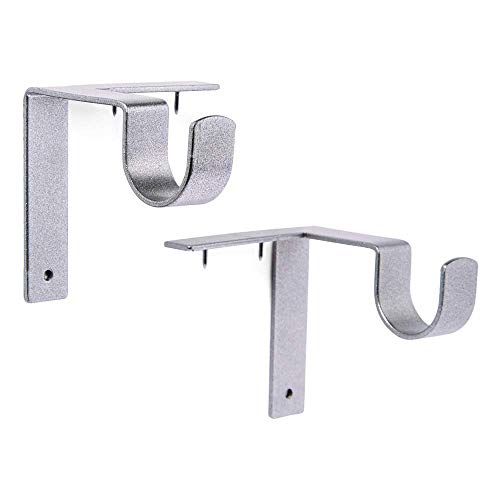
The Kwik-Hang bracket is the gold standard for renters who want a traditional curtain rod look without a single hole in their wall. Installation is dead simple: position the bracket against your window trim, give it a few taps with a hammer, and you're done. No drilling, no anchors, no mess. The bracket bites into the wood trim of your window frame — not your drywall — which means the tiny indentations it leaves are in the trim, not the plaster, and landlords almost never flag those.
These brackets are rated to hold up to 20 pounds, which covers most medium-weight drapes and curtain panels comfortably. The 1-inch silver finish is clean and minimal, and the brackets work on any window with at least a ½-inch deep trim. If your window trim is thinner than that, you'll need to look at another option from this list. For the majority of standard American rental windows, though, the Kwik-Hang fits perfectly.
The one limitation to know upfront: these require wood trim around your window. They won't work on metal frames, vinyl windows without wood trim, or windows flush with drywall. Check your window situation before buying. That said, for the windows they do fit, this is the fastest, most satisfying no-drill install you'll experience.
Pros:
- Installs in under 60 seconds with just a hammer — no tools kit required
- Supports up to 20 lbs, suitable for heavier drapes
- Leaves no holes in drywall — tiny marks only on wood trim
- Clean silver finish blends with most curtain rod styles
- Works for renters, frequent movers, and anyone avoiding permanent damage
Cons:
- Requires at least ½-inch deep wood window trim — won't work on all window types
- Sold as a single bracket set — buy two packs for one full window
2. Spark Innovators Tap Curtain Rod Bracket — Best Budget Tap-In Pick
If you want the tap-in concept at a lower price point, the Spark Innovators bracket is worth a close look. As seen on TV, this 2-pack of bronze brackets uses the same place-and-tap approach as the Kwik-Hang — position on your window trim, tap with a hammer, and hang your rod. The process genuinely takes seconds. No screws. No nails. No drilling whatsoever.
The bronze finish is a nice touch if your home leans toward warmer, more traditional tones. These brackets are compatible with standard curtain rod sizes and work on windows with ½-inch deep trim, same as the Kwik-Hang. The 2-pack format means one purchase covers both sides of a single window, which makes the value proposition more straightforward.
Where the Spark Innovators bracket sits slightly below the Kwik-Hang is in the build quality and the finish durability over repeated removal and reinstallation. If you move a lot and plan to reuse these brackets across multiple apartments, the Kwik-Hang's heavier construction holds up better over time. For a single rental stay or a first apartment where budget matters, the Spark Innovators is a solid, practical choice that does exactly what it says.
Pros:
- 2-pack covers a full window in one purchase
- Installs in seconds — just place, tap, and hang
- Warm bronze finish suits traditional and rustic décor styles
- Fits any standard curtain rod size
- No screws, nails, or anchors needed
Cons:
- Build quality slightly less robust than the Kwik-Hang for repeated use
- Still requires window trim with at least ½-inch depth
3. Kenney Rogers Twist & Fit Tension Curtain Rod — Best Tension Rod Overall
Kenney Manufacturing has been making window hardware for over 100 years, and the Rogers Twist & Fit tension rod is one of their best designs for renters. This rod installs inside your window frame — no wall contact at all. Extend it to your window width, twist to lock the built-in camlock mechanism, and it holds firm with pure spring tension. Zero tools. Zero marks. Zero stress at move-out.
The 5/8-inch diameter rod extends from 28 to 48 inches, covering the vast majority of standard window widths you'll encounter in apartments and rental homes. The durable steel construction feels solid, not flimsy — this is not the cheap spring rod from the dollar store that bends under the weight of your curtains. Non-slip decorative end caps grip the inside of your window frame and prevent the rod from sliding or drooping over time.
The one trade-off with any tension rod is that it installs inside the window frame rather than above it. That means your curtains hang inside the window recess, which can look clean and minimalist — or can block some natural light depending on your curtain length and window depth. If you want curtains mounted above the frame that create the illusion of a taller ceiling, you'll want a tap-in or adhesive bracket instead. For inside-mount curtains, though, the Kenney Twist & Fit is the most reliable tension rod on this list.
Pros:
- 100% tool-free — no hammer needed, just twist and lock
- Camlock mechanism holds significantly better than basic spring tension
- Adjustable 28–48 inches covers most standard window widths
- Durable steel construction — won't bend under moderate curtain weight
- Non-slip end caps prevent sagging and shifting
Cons:
- Inside-mount only — not suitable if you want curtains hung above the window frame
- Not ideal for very heavy or blackout curtain panels
4. Zenna Home Adjustable Curtain Tension Rod — Best for Décor-Conscious Renters
If you want a tension rod that looks like a real curtain rod — not a utilitarian spring tube — the Zenna Home model is your answer. It comes with decorative round finials (the decorative end caps at each side) in a brushed nickel finish that genuinely elevates the look of your window. The Twist and Shout mechanism (Zenna's name for their camlock system) gives you a firm, adjustable hold without any tools.
Like the Kenney above, this rod extends from 28 to 48 inches and installs inside the window frame. The brushed nickel finish is versatile enough to work in bedrooms, living rooms, and kitchens. The rod supports up to 20 pounds and is rust-resistant, which matters for bathroom window applications or humid apartments. The decorative finials make this one feel less like a temporary rental solution and more like an intentional design choice.
The Zenna Home rod is a strong pick if aesthetics matter as much as function. It won't suit everyone — some renters just need cheap and functional — but if you're investing in your rental's look for the long term, the brushed nickel finish and finials are worth the slightly higher price. Think of it the same way you'd think about choosing a well-designed plant stand over a plain pot holder — the right finish makes the whole room feel considered.
Pros:
- Decorative finials give a polished, intentional look
- Brushed nickel finish works across multiple room styles
- Twist and Shout camlock provides a secure, adjustable hold
- Rust-resistant — safe for bathroom or humid spaces
- Supports up to 20 lbs
Cons:
- Inside-mount only — not for above-frame installation
- Priced slightly higher than basic tension rods
5. KAMANINA No Drilling Curtain Rod Bracket — Best 3M Adhesive Option
The KAMANINA brackets take a completely different approach from the tap-in and tension options above — these use industrial-strength 3M adhesive to bond directly to your wall surface. That opens up possibilities that trim-dependent brackets can't touch: smooth walls, glass, ceramic tile, stainless steel, and painted surfaces. If you have no window trim at all, or a vinyl-frame window, this is your go-to option.
The bracket set works for both 5/8-inch and 1/2-inch curtain rods, covering the two most common rod diameters. On smooth, non-porous surfaces the 3M adhesive supports up to 16 pounds without any additional hardware. If you're hanging on drywall or a rougher surface, the package includes screws and anchors for 22-pound support — meaning this bracket is genuinely dual-mode depending on your situation. Removal is clean too: warm the adhesive gently with a hairdryer and peel away, leaving no residue on a properly prepared surface.
The compact, minimalist black design looks sharp on modern interiors, and the compact footprint saves wall space. The set of two brackets covers one window. Adhesive performance depends heavily on surface preparation — the wall must be completely clean, dry, and free of dust or oils before you stick these down. Follow the instructions carefully and they hold beautifully; skip the prep step and they'll eventually fail. That's the one honest caveat with any adhesive mounting solution.
Pros:
- Works on smooth walls, glass, tile, and stainless steel — no trim required
- Dual-mode: adhesive for smooth surfaces, screws included for rough walls
- Clean removal with a hairdryer — no residue on smooth surfaces
- Compatible with both 5/8-inch and 1/2-inch rods
- Minimalist black finish suits modern apartment interiors
Cons:
- Surface prep is critical — won't hold on dirty or dusty walls
- Adhesive version limited to 16 lbs on smooth surfaces
6. UrbanRed Self Adhesive Curtain Track — Best for Long Spans and Ceiling Mounts
The UrbanRed adhesive curtain track is something different entirely — and if you've got an unusually wide window, a ceiling mount situation, or a doorway to cover, this is the one solution on this list that handles it elegantly. The kit includes 15 modular 0.6-foot track sections that connect together to form a total run of up to 16.4 feet (5 meters). That covers widths no curtain rod bracket can touch.
Installation uses industrial adhesive tape — peel, stick to a clean ceiling or smooth wall surface, and connect the sections. The package comes with 40 track rollers, 40 iron curtain hooks, 10 end covers, and 14 track connectors — everything you need out of the box. The PVC track is lightweight but durable, and the system supports up to 12 pounds of curtain weight when mounted on a completely smooth, flat surface.
The 12-pound weight limit is the key constraint to keep in mind. Lightweight sheers, linen panels, and thin polyester curtains work perfectly. Heavy velvet drapes or dense blackout panels may push the limit on long runs. This system also requires a very smooth, flat ceiling or wall — textured ceilings, popcorn ceilings, or rough painted surfaces will not bond reliably. For the right situation — a smooth-ceiling apartment, a doorframe curtain divider, or a floor-to-ceiling window treatment — the UrbanRed track is a genuinely clever, renter-safe solution that looks far more intentional than a basic rod.
Pros:
- Covers up to 16.4 feet — handles wide windows and doorways
- Modular design allows custom length configuration
- Complete kit included — no additional hardware needed
- Works on ceilings and walls for versatile mounting positions
- Clean modern track aesthetic
Cons:
- 12-pound weight limit — not suitable for heavy drapes
- Requires perfectly smooth, flat surface for adhesive to bond reliably
- Modular assembly takes longer than a single-rod install
7. No Adhesive Heavy Duty Curtain Rod Holders — Best Heavy-Duty No-Drill Bracket
These brackets solve a problem that frustrates many renters: adhesive mounts eventually fail, especially on painted drywall where adhesives peel the paint. The pin-in curtain rod holders use small precision pins instead of adhesive, screws, or large drill holes — creating a hold that's literally claimed to be 5 times stronger than adhesive hooks, supporting up to 20 pounds, while leaving only tiny pin holes that are nearly invisible and easy to fill with a dab of white toothpaste at move-out.
The 4-pack gives you enough brackets for two windows, or one window with extra support in the middle for wider spans. Each bracket includes a built-in leveling tool and pin guide — this is the feature that separates these from every other bracket in this category. You don't need a separate level, you don't need to measure twice and hope for the best. Position the bracket, check the built-in level, and hammer the guide pin in. Alignment is guaranteed. That's a legitimately thoughtful design choice.
These brackets are designed for 0.75-inch rods specifically — check your rod diameter before purchasing. The wide hook opening accommodates the rod securely without wiggling. For renters who want above-frame curtain installation (the look that makes ceilings appear taller), who need to hang heavier panels, and who don't have suitable window trim for tap-in brackets, this pin-guide system is the smartest heavy-duty no-drill option in 2026. The patent-pending design is genuinely novel and solves the wobble problem that plagues most damage-free brackets.
Pros:
- 5x stronger than adhesive hooks — rated to 20 lbs
- Tiny pin holes instead of large drill holes — nearly invisible at move-out
- Built-in leveling tool ensures perfect alignment every install
- 4-pack covers two full windows
- No sticky residue, no paint peeling, no large patches to fill
- Works on drywall where adhesives often fail
Cons:
- Designed specifically for 0.75-inch rods — check compatibility
- Still leaves small pin holes that technically count as wall damage (though minimal)
Choosing the Right No-Drill Curtain Solution: A Buying Guide
With seven distinct products covering four different mounting methods, picking the right one comes down to four key factors. Here's what to think through before you order.

1. Know Your Mounting Method First
There are four fundamentally different approaches to no-drill curtain hanging, and each one suits a different window situation:
- Tap-in brackets (Kwik-Hang, Spark Innovators) — hammer small teeth into your wood window trim. Best for: windows with solid wood trim, above-frame mounting, traditional curtain rod look. Requires at minimum ½-inch deep trim.
- Tension rods (Kenney, Zenna Home) — spring tension holds the rod inside the window frame. Best for: inside-mount curtains, café curtains, bathroom windows. Zero contact with walls or trim.
- Adhesive brackets (KAMANINA, UrbanRed) — industrial adhesive bonds to smooth surfaces. Best for: smooth walls, tile, glass, or surfaces with no trim. Requires careful surface prep and has weight limits.
- Pin-guide brackets (No Adhesive Heavy Duty) — tiny pins penetrate drywall minimally. Best for: drywall walls where adhesive fails, above-frame mounting with heavier panels, renters who want stronger-than-adhesive hold with minimal damage.

2. Check Your Window Trim (This Matters More Than You Think)
The single most common reason no-drill brackets fail is incompatibility with the window itself. Before you buy anything, do this quick check:
- Measure the depth of your window trim with a ruler. If it's at least ½ inch deep and made of wood, tap-in brackets are your best bet.
- If you have metal window frames, vinyl frames, or no trim at all, skip tap-in brackets entirely and go adhesive or tension.
- If your window trim is painted over many times and looks soft or flaky, adhesive brackets on the wall surface above the frame may be safer than tapping into the trim.
- For doorways or unusually wide openings (over 48 inches), the UrbanRed ceiling track is your best option — no standard curtain rod reaches that width without a center support.

3. Match Weight Capacity to Your Curtains
Weight capacity is the most underestimated spec in curtain hardware. A thin linen sheer weighs almost nothing. A lined blackout panel in a 96-inch length can top 8–10 pounds per panel — which means two panels on a single rod can push 20 pounds before you factor in the rod itself.
- Under 10 lbs total: Any option on this list works. UrbanRed adhesive track is fine.
- 10–20 lbs: Use Kwik-Hang, Zenna Home tension rod, KAMANINA with screws, or the pin-guide brackets.
- Over 20 lbs or very long spans: You're pushing past damage-free territory. Consider whether lightweight curtain alternatives like sheers or lightweight linen would achieve the look you want within a safer weight range.
A note on command hooks as an alternative: many renters use heavy-duty command hooks to hang curtains, and they do work for very lightweight panels.
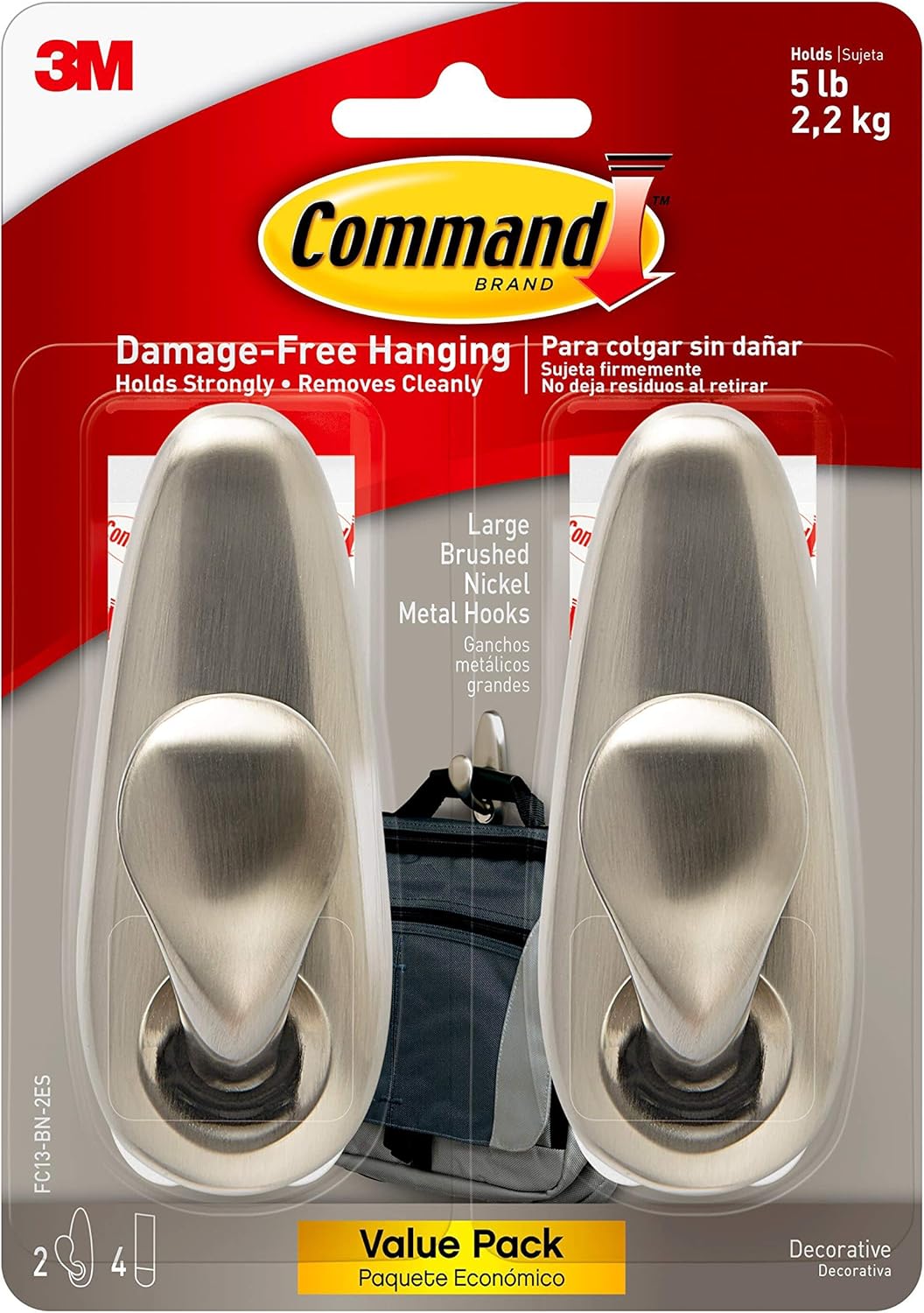
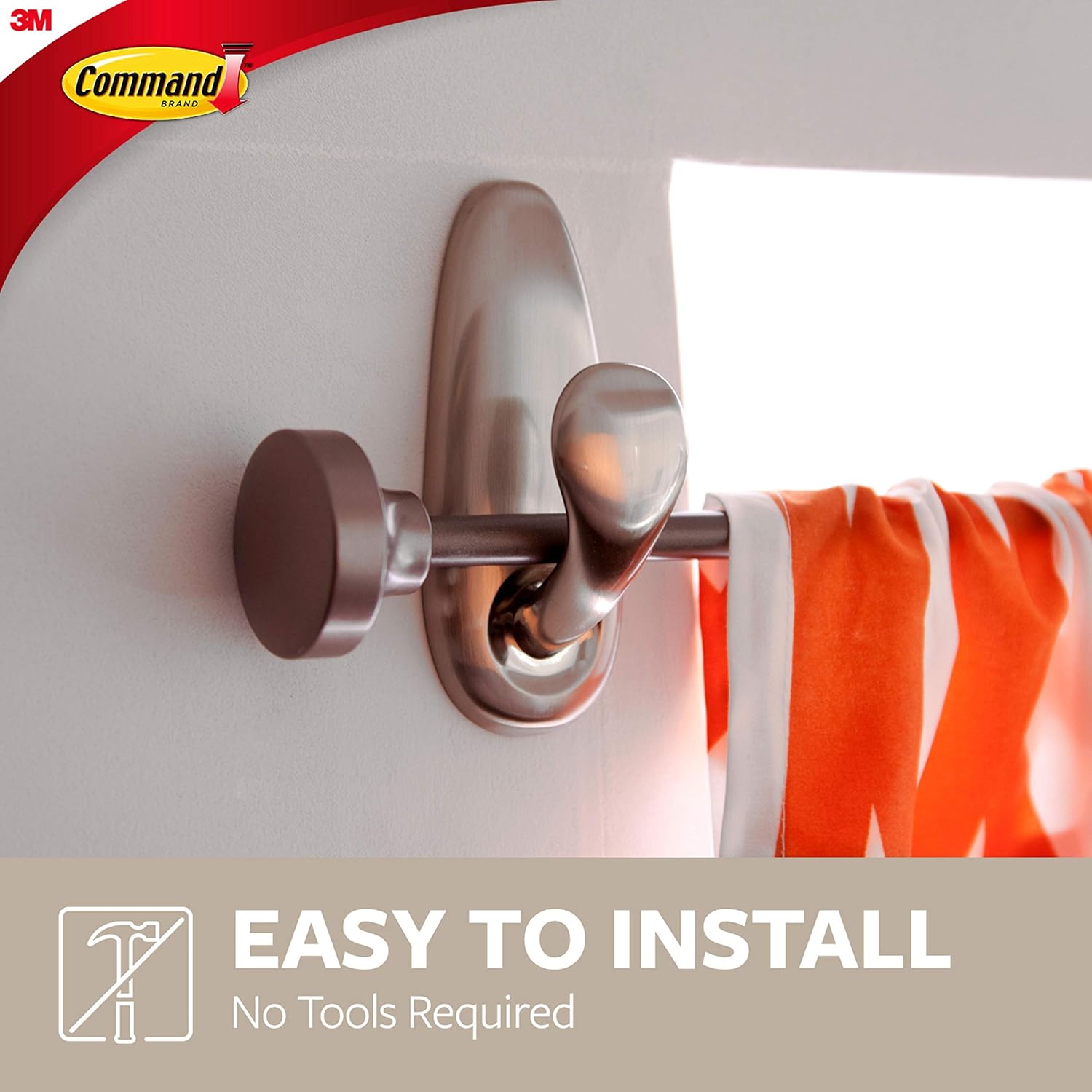
The heavy-duty command strips and hooks (shown above and below) from 3M can support curtain rods when you use a U-shaped hook wide enough for your rod diameter. The key is using the jumbo or large-size hooks rated for 5–7 lbs each, pairing four of them across a window, and keeping your curtain panels lightweight. This is a genuinely zero-damage option on smooth painted walls, but the weight limit is real — treat it as a last resort for situations where none of the products above are compatible with your window.

4. Think About the Look You're Going For
The hardware you choose affects how your curtains look and how they function day-to-day. Here's a quick style guide:
- Traditional rod-above-the-frame look: Tap-in brackets (Kwik-Hang, Spark Innovators) or pin-guide brackets. These mount above the window and give you the full curtain-extends-to-floor aesthetic.
- Minimalist inside-mount look: Tension rods (Kenney, Zenna Home). Curtains sit inside the window recess, clean and café-style.
- Modern ceiling-to-floor drama: UrbanRed ceiling track. For smooth-ceiling apartments where you want that hotel-room curtain vibe.
- No-trim modern wall mounting: KAMANINA adhesive brackets. Versatile finish options for contemporary rental spaces.
For more ways to transform your rental without permanent changes, browse the home and lifestyle ideas section — there are plenty of creative approaches that work even with strict landlord rules.


FAQs
Can I hang curtains without drilling in any rental apartment?
In most cases, yes. The specific method depends on your window type. If you have wood trim around your windows, tap-in brackets like the Kwik-Hang work perfectly. If your windows sit flush with the wall or have metal or vinyl frames, tension rods (for inside-mount) or adhesive brackets work instead. The pin-guide brackets work on drywall walls for above-frame mounting without trim. Between these four methods, virtually every standard rental window configuration is covered.
Will no-drill curtain brackets work with any curtain rod?
Most tap-in and adhesive brackets are designed for standard 1-inch diameter curtain rods, which covers the vast majority of rods sold at home stores. The pin-guide brackets in this review are specifically sized for 0.75-inch rods. The KAMANINA adhesive brackets work with both 5/8-inch and 1/2-inch rods. Always check the rod diameter listed in the product description and match it to your existing rod or the rod you plan to purchase.
How much weight can no-drill curtain solutions hold?
It varies by method. Tap-in brackets (Kwik-Hang, Spark Innovators) and pin-guide brackets support up to 20 lbs — enough for most lined curtain panels. The Zenna Home and Kenney tension rods also support 20 lbs when properly installed. The KAMANINA adhesive brackets hold 16 lbs on smooth surfaces (22 lbs with the included screws). The UrbanRed track supports 12 lbs maximum on smooth surfaces. Weigh your curtains before purchasing if you're using heavy blackout panels.
Will tap-in brackets damage my window trim or cost me my security deposit?
Tap-in brackets leave small indentations in your wood window trim — not holes in drywall. Most landlords do not consider minor marks on window trim to be damage, since trim is a replaceable, low-cost element. That said, every landlord is different. If your lease specifically prohibits any modifications to window trim, tension rods or adhesive brackets are your completely zero-damage alternative. For drywall surfaces, the pin-guide brackets leave tiny pin holes that are significantly easier and cheaper to fill than standard drill holes.
Can I reuse no-drill curtain brackets when I move to a new apartment?
Yes, with some method-dependent caveats. Tap-in brackets (Kwik-Hang, Spark Innovators) pull out of the trim and reinstall in a new window — the brackets themselves are fully reusable. Tension rods are completely reusable with no wear at all. Adhesive brackets depend on the adhesive — KAMANINA brackets can be removed cleanly and re-stuck if you have replacement adhesive pads (often sold separately). The pin-guide brackets are fully reusable as long as the pins haven't bent. Plan to keep the original packaging so you have all hardware for the next move.
What's the best no-drill curtain solution for heavy blackout curtains?
For the heaviest curtain panels, your best option is either the Kwik-Hang tap-in brackets or the No Adhesive Heavy Duty pin-guide brackets — both rated to 20 lbs and both provide above-frame mounting for full-length blackout curtains. If your window has solid wood trim, go with Kwik-Hang. If you're mounting on drywall without trim, go with the pin-guide brackets. Make sure your curtain rod itself is also rated for the combined weight of both panels, and consider adding a center support bracket for rods spanning more than 48 inches.
Buy on Walmart
- Kwik-Hang Single Curtain Rod Brackets – No Drill, No Damage — Walmart Link
- Spark Innovators Tap Curtain Rod Bracket - No Drill Curtain — Walmart Link
- Kenney - Rogers Twist & Fit No Tools Camlock Tension Curtain — Walmart Link
- Zenna Home Adjustable Curtain Tension Rod with Decorative Ro — Walmart Link
- KAMANINA No Drilling Curtain Rod Bracket for 5/8 and 1/2 Inc — Walmart Link
- UrbanRed Self Adhesive Curtain Track (5 Meter, 16.4 ft) for — Walmart Link
- No Adhesive Heavy Duty Curtain Rod Holders with Wide Hook, 5 — Walmart Link
Buy on eBay
- Kwik-Hang Single Curtain Rod Brackets – No Drill, No Damage — eBay Link
- Spark Innovators Tap Curtain Rod Bracket - No Drill Curtain — eBay Link
- Kenney - Rogers Twist & Fit No Tools Camlock Tension Curtain — eBay Link
- Zenna Home Adjustable Curtain Tension Rod with Decorative Ro — eBay Link
- KAMANINA No Drilling Curtain Rod Bracket for 5/8 and 1/2 Inc — eBay Link
- UrbanRed Self Adhesive Curtain Track (5 Meter, 16.4 ft) for — eBay Link
- No Adhesive Heavy Duty Curtain Rod Holders with Wide Hook, 5 — eBay Link
Key Takeaways
- Kwik-Hang is the best overall pick for renters with standard wood-trim windows — fastest install, strongest hold, and the most traditional curtain rod look.
- Kenney Twist & Fit and Zenna Home tension rods are the safest true zero-damage options, leaving absolutely no marks on walls or trim — ideal for bathrooms and inside-mount windows.
- The No Adhesive Pin Brackets solve the drywall problem that stumps most no-drill solutions — 5x stronger than adhesive with only tiny pin holes, making them the best above-frame option when you have no wood trim.
- Match your method to your window type before buying — wood trim, smooth wall, vinyl frame, and drywall each have a different optimal solution from this list, and buying the wrong type is the only real way to fail with no-drill curtain hardware.
 |
 |
 |
 |

About Mia M.
Mia M. runs Beautiful Inspiring Creative Life, a personal blog covering DIY projects, bullet journaling, stationery, fashion finds, and interior inspiration. Her writing takes a creative-life-documentation approach — sharing the small aesthetic pleasures and practical projects that make daily life feel more intentional. Topics span hand-lettering and planner spreads, DIY room makeovers, thrift flips, affordable fashion, and honest reviews of the notebooks, pens, and craft supplies she actually uses. The blog began as a personal journaling project and grew into a creative-lifestyle space for readers building their own aesthetic routines, with posts that balance inspiration with the real-world budgets and time constraints of everyday hobbyists.
hey, i'm mia

tattoo lover, plant hoarder, DIY addict and overall stoner grandma
Check out the FREE Gifts. Or latest free DIY eBooks from our best compilation.
Turn off Ad Block to reveal all the secrets. Once done, hit any button:
|
|
|
|