Best ID Card Printers (2026): Top PVC Badge Printers Reviewed
by Mia M.
Picture this: you're the office manager at a mid-sized company, and your boss just handed you the task of printing staff ID badges for 200 employees before the end of the month. You've never bought an ID card printer before, so you open a browser tab and immediately get hit with a wall of jargon — retransfer, dye sublimation (a printing method where ink turns directly from solid to gas to bond with card material), ZRaster, HDP. It's overwhelming. The good news? Once you understand a few basics, the right printer becomes obvious for your situation.
ID card printers are specialized machines built to produce PVC (polyvinyl chloride) cards — the same hard plastic format used for employee badges, student IDs, membership cards, and access control credentials. Unlike a regular inkjet or laser printer, these machines use ribbon-based dye sublimation or retransfer technology to produce vibrant, durable, professional cards. In 2026, the market has matured significantly, with options ranging from compact desktop units for small offices to high-volume workhorses for enterprise security teams. Whether you need to print 50 cards a year or 5,000, there's a printer built for exactly that load.
This guide covers seven of the best ID card printers available in 2026, covering everything from budget-friendly entry-level units to premium retransfer models. We've looked at print quality, speed, encoding options, software compatibility, and real-world durability to give you a clear, honest picture of what each machine delivers. If you're also exploring other specialty printing projects, check out our guides on the best printers for crafting and the best printers for stickers for related recommendations. For more curated product picks, browse our full reviews section.
Contents
Top Rated Picks of 2026
- #PreviewProductRating
- Bestseller No. 1
 Rating:

- Bestseller No. 2
 Rating:
 - Bestseller No. 3
 Rating:
 - Bestseller No. 4
 Rating:
 - Bestseller No. 5
 Rating:
 - Bestseller No. 6
 Rating:
 - Bestseller No. 7
 Rating:
Detailed Product Reviews
1. Zebra ZXP Series 3 Dual Side ID Card Printer — Best Overall
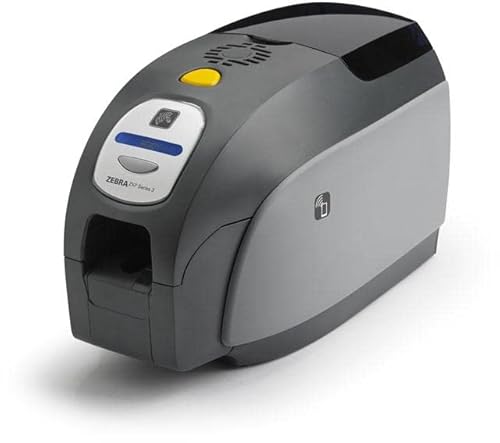
The Zebra ZXP Series 3 is the printer most IT departments and HR teams end up recommending to each other, and for good reason. At its core, this machine runs on Zebra's ZRaster host-based image processing technology, which shifts the heavy image processing workload to your computer's CPU rather than an internal processor. The result is noticeably faster throughput and consistently sharp, vibrant color output — especially important when you're running dual-sided prints across a full employee roster. The physical build feels solid, professional-grade, and designed to sit on a desk and work every day without fuss.
What separates this printer from cheaper alternatives is its encoding versatility. The ZXP Series 3 supports both smart card encoding and magnetic stripe encoding, which means it can handle a wide variety of credential formats — from basic photo ID badges to access control cards that communicate with building security systems. The high-performance ribbon system is designed specifically for speed-quality balance, delivering print runs that look professional without slowing your operation to a crawl. Setup is straightforward via USB, and Zebra's CardStudio software (sold separately) provides a clean design interface for badge layouts.
This is a dual-sided printer, so you get full-color printing on both the front and back of every card in a single pass. For organizations issuing cards that include employee photos, names, and department info on the front with barcodes or policy text on the back, that single-pass dual printing is a huge time saver. Ribbon replacement is tool-free and takes about 60 seconds once you've done it twice. If you print anywhere from 500 to 3,000 cards per year and need smart card or mag-stripe capability, the ZXP Series 3 is the machine to buy.
Pros:
- ZRaster processing delivers fast, high-quality dual-sided output
- Smart card and magnetic stripe encoding built in
- Durable, professional-grade build quality
- Tool-free ribbon replacement
Cons:
- CardStudio design software sold separately
- Higher upfront cost than entry-level options
2. Zebra ZC300 Dual Sided ID Card Printer — Best Mid-Range
The Zebra ZC300 is one of the most user-friendly ID card printers on the market in 2026. It hits the sweet spot between capable features and approachable operation — making it ideal for organizations where the person running the printer isn't necessarily a tech specialist. The graphical LED/LCD interface uses well-designed icons, animations, and multilingual text prompts that walk you through every task, from loading ribbons to clearing card jams. You don't need to read a manual to figure this machine out, which matters more than most vendors admit.
Print flexibility is another strong suit here. The ZC300 handles both color and monochrome printing, which is genuinely useful — color for full photo ID badges, monochrome for temporary visitor passes or high-volume runs where ink cost matters. The encoding options are impressive for the price point: you can produce both magnetic stripe (swipe-and-go) cards and contactless smart cards. The ZIP Pocket system and updated Software Development Kits (SDKs) mean integration with third-party contactless encoders is much simpler than on older Zebra models, which matters if your access control system uses a specific card format.
Connectivity includes USB and Ethernet, so you can set this printer up as a shared network device — no need to dedicate one workstation to card printing. The card hopper holds a standard deck of blanks, and ribbon changes are clean and fast. For a mid-range budget, the ZC300 delivers features that would've cost significantly more a few years ago. If the ZXP Series 3 is slightly over your budget or more machine than you need, the ZC300 is the next call to make.
Pros:
- Highly intuitive LCD/LED interface — easy for any staff member to operate
- Both color and monochrome printing modes
- Magnetic stripe and contactless encoding options
- Network-ready via Ethernet
Cons:
- Print speed is moderate compared to higher-tier models
- SDK integration requires some IT involvement for complex setups
3. HID Fargo HDP5000 Dual Side Base Model Printer — Best Print Quality
If print quality is non-negotiable for you — think government-issued IDs, university credentials, or high-security corporate badges — the HID Fargo HDP5000 is in a different class from standard dye sublimation printers. This machine uses High Definition Printing (HDP) retransfer technology, which works differently from direct-to-card methods. Instead of printing directly onto the card surface, it first prints onto a clear film, then thermally bonds that film to the card. The result is edge-to-edge coverage, no white borders, and a level of image clarity that direct-to-card simply can't match.
Retransfer printing also provides better compatibility with cards that have irregular surfaces — smart card chips, proximity card bumps, and other embossed features that cause quality issues with standard printers. The HDP5000 handles both sides of the card, and the output looks genuinely premium. Colors are richer and more saturated, text is sharper, and photo reproduction is noticeably superior to anything produced by a thermal transfer printer at the same card size. This is the type of printer used by institutions that can't afford credentials that look cheap or are easy to counterfeit.
The trade-off is cost — both upfront and per-card. HDP film and ribbon consumables are more expensive than standard ribbons, and the printer itself carries a premium price tag. But for organizations where card appearance directly reflects institutional credibility, that cost is justified. Setup involves Fargo's WORKBENCH printer management software and standard USB or Ethernet connectivity. The dual-sided base model reviewed here is the starting configuration; additional encoding modules can be added later. According to Wikipedia's overview of retransfer printing, this method consistently produces superior image quality over direct thermal transfer for credential applications.
Pros:
- HDP retransfer technology delivers edge-to-edge, premium-quality printing
- Superior image clarity compared to direct-to-card printers
- Works well on cards with chips or uneven surfaces
- Expandable with encoding modules
Cons:
- Significantly higher consumable costs (HDP film + ribbon)
- Premium upfront price not suitable for low-volume users
4. Fargo DTC4500e ID Card Printer (Dual-Sided) — Best for High Volume
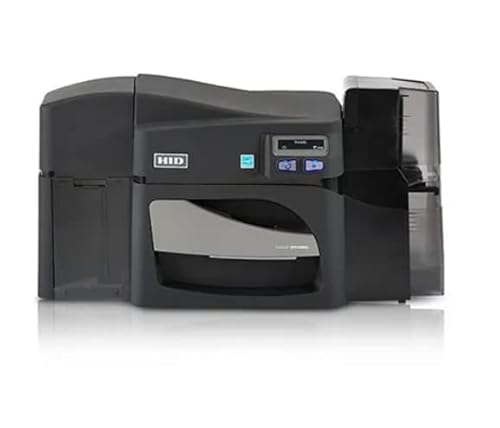
When volume is the priority, the Fargo DTC4500e is built for exactly that. This is a direct-to-card dye sublimation printer designed for organizations that need to print hundreds of ID cards quickly and consistently. The headline numbers: 225 full-color cards per hour single-sided, and 150 dual-sided cards per hour. Those figures put it well ahead of most competitors in the mid-to-high range and make it the right choice for universities at enrollment time, large corporations onboarding seasonal staff, or facilities issuing visitor credentials at scale.
The SmartScreen display is one of the DTC4500e's most practical features. It's a touchscreen-style interface that walks you through setup, displays printer status, ribbon life remaining, and error diagnostics in plain language. You're not decoding cryptic blinking LED codes when something goes wrong — the screen tells you what happened and what to do about it. Connectivity via both USB and Ethernet is standard, so plugging this into your network for shared access takes minutes. The printer also supports optional encoding modules for magnetic stripe, smart card contact and contactless, and proximity card formats.
The input card hopper holds up to 100 cards, and the output stacker keeps printed cards neatly organized as they come out. Build quality is robust — this printer is designed for daily heavy use, not occasional runs. Ribbon capacity is high, reducing how often you need to swap consumables during large batches. For anyone running 3,000+ cards per year or running large single-session print jobs for events or enrollment periods, the DTC4500e delivers enterprise-level throughput without requiring a specialist to operate it.
Pros:
- 225 cards/hour single-sided — exceptional throughput for high-volume needs
- SmartScreen display simplifies operation and troubleshooting
- USB and Ethernet connectivity for shared network use
- Supports a wide range of optional encoding modules
Cons:
- Overkill and overpriced for organizations with low card volumes
- Large footprint — needs dedicated desk space

5. Evolis Zenius 2 Single Sided ID Card Printer & Supplies Bundle — Best Starter Bundle
New for 2026, the Evolis Zenius 2 replaces the popular original Zenius model with an updated design and an all-in-one bundle that's genuinely useful for first-time buyers. The bundle includes the printer, a 200-capacity color ribbon, 100 blank PVC cards, and card imaging design software — so you can print your first badge within an hour of opening the box. That turnkey approach is a genuine advantage if you've never set up a card printer before and don't want to spend time sourcing compatible consumables separately.
The Zenius 2 uses direct-to-card dye sublimation printing, which delivers vibrant full-color output at a resolution that looks professional for most badge applications. It's a single-sided printer, so you'll print one face of the card per pass — that's the right trade-off for organizations that only need a front-side photo ID format. Print speed is solid for a single-sided machine, and the compact footprint means it fits comfortably on a desk without dominating the space. The included design software handles basic badge layout with photo import, text fields, and logo placement.
Evolis has a strong reputation for build quality and after-sales support, and the Zenius 2 continues that tradition. Ribbon changes are straightforward, card loading is smooth, and the overall operation is quiet compared to some competitors. This is not a machine for heavy daily volume — it's built for small offices, schools, or clubs that print cards in batches of dozens or low hundreds per year. If you're also interested in other card-based crafting and printing setups, our guide to the best printers for 110 lb cardstock covers related heavy-stock printing options worth knowing about.
Pros:
- New 2026 model with bundle including ribbon, cards, and design software
- Compact, quiet, and easy to set up for first-time users
- Good color output quality for badge-level printing
- Evolis brand reliability and support
Cons:
- Single-sided only — not suitable if you need dual-sided printing
- Not designed for high-volume daily use
6. Evolis Badgy200 Card Printing Solution — Best for Small Offices
The Evolis Badgy200 is the printer you buy when your needs are genuinely modest and you want a complete, ready-to-go solution at an accessible price. This bundle includes the Badgy200 printer, a color ribbon for 100 prints, 100 blank PVC cards at 30 mil thickness (the standard card thickness, same as a credit card), and Badge Studio+ software. Like the Zenius 2, it takes the guesswork out of your first purchase — everything you need is in one box, and the software is designed specifically for non-technical users who just need to make professional-looking badges without a design background.
The Badgy200 is a single-sided, direct-to-card printer — the same core technology as the Zenius 2, but positioned at the more budget-conscious end of the Evolis lineup. Print quality is good for the price point: colors are vivid, photos print cleanly, and text is sharp enough for names, titles, and small barcodes. The printer connects via USB, and setup from box-open to first card is realistically under 30 minutes. The Badge Studio+ software includes templates, photo editing tools, and barcode generation, which covers the needs of most small organizations completely.
Volume matters here. The Badgy200 is built for light use — think a yoga studio printing membership cards, a small school issuing student IDs, or a community organization making volunteer badges. If you're printing more than a few hundred cards per year on a regular basis, you'll bump into the limits of this machine faster than you'd like. But for its intended use case — small, infrequent batches where simplicity and cost are the main priorities — the Badgy200 delivers everything it promises and nothing it doesn't.
Pros:
- Complete bundle with ribbon, cards, and Badge Studio+ software included
- Very easy setup and operation for non-technical users
- Good print quality for the entry-level price
- Compact size — fits on any desk
Cons:
- Single-sided printing only
- Not suitable for medium or high-volume print needs
7. Datacard SD260 Single Sided ID Card Printer — Best Reliability
The Datacard SD260 has been a go-to choice for organizations that need a dependable workhorse rather than the newest technology. This is a single-sided, direct-to-card printer built with Datacard's reputation for industrial-grade reliability at the center of its design. The SD260 uses a 100-card input hopper (the H1 configuration), meaning you can load a full deck of blank cards and walk away — it handles the print run without you standing there feeding cards one at a time. That level of automation matters when you have a pile of badges to produce and other tasks to get back to.
Print quality on the SD260 is consistently good across color and monochrome runs. Datacard's engineering focuses on consistent output over thousands of cards rather than pushing for the absolute highest resolution — a trade-off that works perfectly for ID badge applications where reliability and repeatability matter more than photographic detail. The printer uses standard USB connectivity and works with Datacard's ID Works software as well as most major third-party card design applications. Ribbon and card loading are clean and mechanical, with a build quality that feels like it's designed to outlast the desk it sits on.
This is a machine with a strong track record in healthcare facilities, government offices, and educational institutions — environments where the printer needs to run day after day without surprises. It's not the flashiest option on this list, and it doesn't need to be. If your priority is a single-sided printer that you can count on to produce consistent, professional output month after month with minimal fuss, the Datacard SD260 earns its place on this list. It's the kind of printer you set up once and forget about until it's time to replace a ribbon. Also worth noting: if you print other specialty card formats as part of your workflow, our roundup of the best crafting printers covers a broader range of specialty printing options.
Pros:
- 100-card input hopper for hands-free batch printing
- Excellent long-term reliability — trusted in enterprise environments
- Consistent, professional print quality across large print runs
- Compatible with most major card design software
Cons:
- Single-sided only — no dual-sided printing capability
- Older design with fewer modern interface features compared to newer models
Buying Guide: How to Choose the Best ID Card Printer
Buying an ID card printer without a framework is how you end up with the wrong machine for your volume or a printer that can't handle your card format. Here are the four questions that matter most before you click buy.
Single-Sided vs. Dual-Sided Printing
This is the first decision to make. Single-sided printers print on one face of the card per pass — they're simpler, less expensive, and perfectly adequate for organizations that only need a photo, name, and title on the front. Dual-sided printers print both faces in a single pass, which is essential if you need barcodes, policy text, emergency contacts, or department coding on the card back. The Zebra ZXP Series 3, ZC300, HID Fargo HDP5000, and Fargo DTC4500e all offer dual-sided capability. The Evolis models and Datacard SD260 are single-sided. Buy dual-sided if your card design uses both faces — it saves you a second manual flip-and-reprint step that creates alignment headaches at scale.
Print Volume: How Many Cards Per Year?
Volume is the clearest guide to which tier of printer you need. Under 500 cards per year — the Evolis Badgy200 or Zenius 2 is entirely sufficient and costs significantly less than enterprise options. Between 500 and 3,000 cards per year — the Zebra ZXP Series 3, ZC300, or Datacard SD260 hits the right balance of throughput and cost. Above 3,000 cards per year or for large event-based batch runs — the Fargo DTC4500e's 225 cards-per-hour single-sided speed makes it the clear choice. Matching volume to printer tier prevents you from either overspending or wearing out an underpowered machine faster than its designed lifespan.
Encoding Requirements: Smart Card, Magnetic Stripe, or Plain?
Many organizations need more than a printed card — they need a card that does something electronically. Magnetic stripe cards (like credit card swipe strips) store basic data for door access and time-tracking systems. Contact smart card chips store more complex data and are used in high-security access control. Contactless cards (RFID/NFC) communicate wirelessly with card readers without physical contact. If your building access system or time-tracking software requires encoded cards, confirm your printer supports the specific encoding format before purchasing. The Zebra ZXP Series 3 and ZC300 cover magnetic stripe and contactless. The HID Fargo HDP5000 and Fargo DTC4500e support encoding modules across all major formats. The Evolis models and Datacard SD260 in their base configurations focus on printed credentials.
Print Technology: Direct-to-Card vs. Retransfer
Most printers on this list use direct-to-card (DTC) dye sublimation — ink is applied directly to the card surface. This works excellently for standard PVC cards and produces good color output at reasonable cost. Retransfer printing, used exclusively by the HID Fargo HDP5000 in this list, prints first to a clear film then laminates it to the card. The output difference is visible: retransfer delivers edge-to-edge printing with no white border effect, superior image sharpness, and better compatibility with smart card chips and uneven card surfaces. The cost per card is higher with retransfer, but for government IDs, university credentials, or high-security applications where visual quality and durability are critical, that premium is worth it.
What People Ask
What is the difference between a direct-to-card printer and a retransfer printer?
A direct-to-card (DTC) printer applies dye sublimation ink directly onto the surface of the PVC card. It's fast, cost-effective, and works well for most standard badge applications. A retransfer printer first prints onto a clear film, which is then thermally bonded over the entire card surface — including any embedded chips or uneven areas. Retransfer produces sharper images, true edge-to-edge printing, and better durability, but costs more per card and requires more expensive consumables. For premium credentials and smart cards, retransfer is the better technology.
How many cards can a typical ID card printer produce per hour?
Print speed varies significantly by model and print mode. Entry-level single-sided printers like the Evolis Badgy200 typically produce around 100 cards per hour in color. Mid-range dual-sided models like the Zebra ZXP Series 3 produce roughly 150–175 dual-sided cards per hour. High-volume machines like the Fargo DTC4500e push up to 225 single-sided or 150 dual-sided cards per hour. Always check the manufacturer's published specs for both single-sided and dual-sided speeds, as dual-sided printing is always slower.
Do I need special software to design ID card layouts?
Yes — you need card design software to create your badge layout before printing. Most printers come with basic design software included or available as a download. Zebra offers CardStudio, Fargo includes FARGO ID Works or PolyGuard, and Evolis provides Badge Studio+. These applications let you import photos, add text fields, embed barcodes, and set print parameters for your specific printer model. Third-party options like Asure ID, CardPresso, and ID Flow work with most major printer brands if you need more advanced features like database connectivity or custom encoding workflows.
What type of blank cards do I need for an ID card printer?
Most ID card printers use standard CR80 size PVC cards (3.375 x 2.125 inches — the same dimensions as a credit card) at 30 mil thickness. These are widely available and inexpensive. Some printers can also accept composite cards (PVC/polyester blend) for better durability, or CR79 cards for overlaminates. Always check your printer's card thickness specification before ordering in bulk — using cards that are too thin or too thick can cause feed errors and damage the card transport mechanism over time.
Can I print both color and monochrome on the same ID card printer?
Yes — most mid-range and higher-tier printers support both full-color and monochrome printing modes. The Zebra ZC300 explicitly advertises this flexibility, allowing you to switch between color printing for full photo badges and monochrome for temporary passes or cost-sensitive runs. Some printers require swapping ribbons to switch between modes (a YMCKO full-color ribbon vs. a K monochrome ribbon), while others handle both with a single ribbon type. Check whether your chosen printer lets you easily switch between modes if you plan to use both regularly.
How much does it cost to print each ID card?
The per-card cost depends on the ribbon type, print mode, and card stock. For a standard full-color single-sided card using a YMCKO ribbon, expect roughly $0.50–$1.50 per card when you factor in ribbon and blank card costs. Dual-sided printing adds roughly 30–50% to that cost. Retransfer printing (HDP film + ribbon) costs more — typically $1.50–$3.00+ per card depending on configuration. Monochrome printing is significantly cheaper, sometimes under $0.20 per card. High-volume ribbon packs reduce per-card cost, so buying larger ribbon quantities is always more economical if your monthly volume justifies it.
Buy on Walmart
- Zebra ZXP Series 3 Dual Side ID Card Printer — Walmart Link
- Zebra ZC300 Dual Sided ID Card Printer — Walmart Link
- HID Fargo HDP5000 Dual Side Base Model Printer - 89003 — Walmart Link
- Fargo DTC4500e ID Card Printer (Dual-Sided) — Walmart Link
- Evolis Zenius 2 Single Sided ID Card Printer & Supplies Bund — Walmart Link
- EVOLIS, BADGY200, Card Printing Solution, 1 BADGY200 Printer — Walmart Link
- Datacard SD260 Single Sided ID Card Printer Simplex 100-Card — Walmart Link
Buy on eBay
- Zebra ZXP Series 3 Dual Side ID Card Printer — eBay Link
- Zebra ZC300 Dual Sided ID Card Printer — eBay Link
- HID Fargo HDP5000 Dual Side Base Model Printer - 89003 — eBay Link
- Fargo DTC4500e ID Card Printer (Dual-Sided) — eBay Link
- Evolis Zenius 2 Single Sided ID Card Printer & Supplies Bund — eBay Link
- EVOLIS, BADGY200, Card Printing Solution, 1 BADGY200 Printer — eBay Link
- Datacard SD260 Single Sided ID Card Printer Simplex 100-Card — eBay Link
Final Thoughts
The right ID card printer for your organization is out there — it just comes down to matching volume, card format, and encoding needs to the machine built for that job. Start with the Zebra ZXP Series 3 if you need a reliable all-rounder with encoding options, choose the Fargo DTC4500e if volume is your biggest concern, and pick the Evolis Zenius 2 bundle if you're setting up your first card printing station in 2026 and want everything ready to go out of the box. Head to Amazon, check current pricing, and order with confidence — any of the seven options on this list will produce professional credentials that hold up in the real world.
 |
 |
 |
 |

About Mia M.
Mia M. runs Beautiful Inspiring Creative Life, a personal blog covering DIY projects, bullet journaling, stationery, fashion finds, and interior inspiration. Her writing takes a creative-life-documentation approach — sharing the small aesthetic pleasures and practical projects that make daily life feel more intentional. Topics span hand-lettering and planner spreads, DIY room makeovers, thrift flips, affordable fashion, and honest reviews of the notebooks, pens, and craft supplies she actually uses. The blog began as a personal journaling project and grew into a creative-lifestyle space for readers building their own aesthetic routines, with posts that balance inspiration with the real-world budgets and time constraints of everyday hobbyists.
hey, i'm mia

tattoo lover, plant hoarder, DIY addict and overall stoner grandma
Check out the FREE Gifts. Or latest free DIY eBooks from our best compilation.
Turn off Ad Block to reveal all the secrets. Once done, hit any button:
|
|
|
|